
Arab Canada News – News for the Arab Community in Canada
News
A foreign object hit the engine before the window shattered.. Investigation reveals the sequence of the Ryanair plane incident
A piece detached from the engine and hit the cabin window, causing a rapid loss of pressure and partially pulling a passenger out of the plane minutes after it took off from Greece.
Published: July 20, 2026
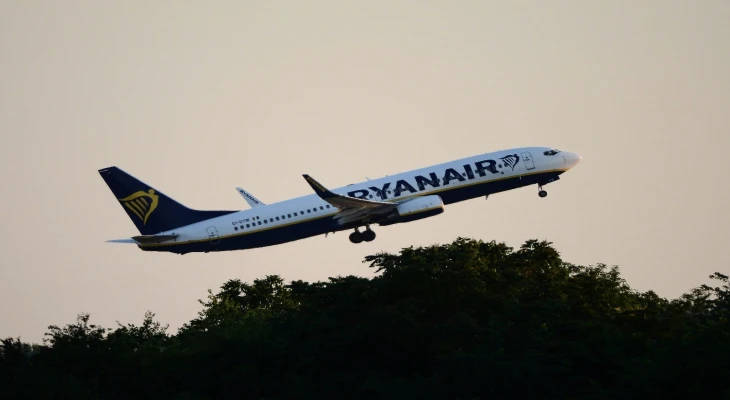
Preliminary results of the investigation into the serious incident involving an aircraft belonging to the «Ryanair» group indicate that a foreign object may have struck the right engine during takeoff, causing damage that led to a part of it detaching and hitting one of the passenger cabin windows.
The window's shattering caused a rapid loss of cabin pressure, followed by a strong rush of air toward the opening, which partially pulled a passenger sitting next to it out of the plane before family members and other passengers managed to pull him back inside.
The incident occurred on July 10 aboard a «Boeing 737-800» aircraft, which was heading from the Greek city of Thessaloniki to Memmingen in southern Germany, operated by «Malta Air», a subsidiary of the «Ryanair» group.
The group’s CEO, Michael O’Leary, said that initial data suggests the engine may have suffered what is known in the aviation sector as «foreign object damage», but he confirmed that the investigation has not yet reached a conclusive result regarding the nature of the object or how it reached the engine.
The term «foreign object» is used to describe any external material or piece that can enter or collide with the engine, such as a bird, a stone, or debris near the runway, but investigators have not yet announced the type of object suspected to have initiated the chain of events.
Rapid sequence after takeoff
According to available information, the plane took off in the morning from Thessaloniki Airport and began climbing normally before encountering a problem with its right engine after about six minutes.
The aircraft had surpassed an altitude of 15,000 feet when the malfunction occurred, then began a rapid descent to about 6,000 feet, an altitude that allows passengers to breathe more safely after cabin pressure loss.
The initial hypothesis indicates that the foreign object damaged the engine, then a piece detached and rushed toward the aircraft body, hitting the window made of acrylic layers and causing it to shatter or come out of its place.
As soon as the cabin opened to the outside air, there was a rapid pressure drop, oxygen masks fell from the ceiling, while air and light objects rushed toward the broken window.
Passengers heard a loud noise before the cabin shook and the plane descended sharply, while video recordings from inside showed passengers wearing oxygen masks and a clear opening where the window had been.
The passenger was pulled by his head and shoulders
The 61-year-old passenger was sitting near the window when it shattered, placing him in the area most exposed to the force of the air rush.
The upper part of his body was pulled through the opening before his wife grabbed his legs and prevented him from being pulled out completely, then two other passengers helped her pull him back inside the cabin and away from the window.
The seatbelt helped limit his rush during the first moments, when the airflow force is highest before the pressure inside and outside the cabin equalizes.
The man sustained injuries to his neck and shoulders, in addition to burns and skin abrasions caused by exposure to the high-speed, cold air outside the plane.
He received medical care immediately after the plane landed, while «Ryanair» said the other passengers left the plane and that it later provided a replacement aircraft to transport them to Germany.
Why was the air force so strong?
Commercial airplanes maintain a cabin pressure higher than the atmospheric pressure outside during flight so that passengers can breathe normally at high altitudes.
When a window or part of the aircraft body suddenly opens, air rushes from the higher-pressure area inside the cabin to the outside, causing what is called «rapid decompression» or «explosive decompression».
The suction effect does not continue at the same intensity throughout the flight; the greatest force occurs during the first seconds before the pressure gradually equalizes between inside and outside.
However, people and objects near the opening are at great risk during these moments, especially if they are not secured with seatbelts.
For this reason, aviation safety experts advise passengers to keep their seatbelts fastened throughout the sitting period, even when the seatbelt sign is off, because decompression incidents or turbulence can occur without sufficient warning.
The crew executes an emergency landing
After the malfunction occurred, the pilots began an emergency descent to a lower altitude, which is the primary step when cabin pressure is lost, then decided to return to Thessaloniki.
The plane remained at a low altitude for about half an hour, likely to reduce its weight by consuming some fuel before landing, then returned to the airport about an hour after takeoff.
The «Ryanair» management praised the performance of the pilots and cabin crew, considering that they managed to control the aircraft and bring it back safely despite the damage to the engine and window.
The company confirmed that it is cooperating with the investigation and that the aircraft has been taken out of service for inspection and collection of technical evidence from the engine, window, and damaged parts.
Who is leading the investigation?
It was initially believed that the incident occurred over the airspace of North Macedonia, but a review of the flight path later showed that it happened within Greek airspace.
According to international investigation rules, the state in whose airspace the incident occurred is primarily responsible for the investigation, but Greek authorities decided to refer its leadership to the U.S. National Transportation Safety Board.
The U.S. board’s involvement is linked to the fact that the aircraft was designed and manufactured by an American company, while the Greek investigation authority continues to participate.
The European Union Aviation Safety Agency also appointed a technical advisor to follow the investigation and is in contact with the U.S. Federal Aviation Administration and «Boeing».
Participants may also include the operating company, the engine manufacturer, and experts in metals, aircraft structures, and containment systems inside engines.
Was the engine the primary cause?
The most important information in the investigation is that the window, according to the initial scenario, did not break spontaneously due to an independent defect, but was struck by a piece detached from the engine after it was damaged.
However, this does not settle the reason for the engine failure itself.
Investigators will try to determine whether the foreign object entered the engine from outside, whether it was a bird, debris from the runway, or another material, then examine how the internal components responded to the impact.
They will also investigate whether the engine blades or parts remained inside the designed containment casing, or if a piece penetrated the containment area and rushed toward the aircraft body.
This difference is a key factor in determining whether the incident was caused solely by an exceptional external collision, or if there is a factor related to engine design, component safety, or maintenance procedures.
The company initially excludes age and maintenance
O’Leary said the aircraft is 18 years old and that its engine underwent comprehensive maintenance and overhaul during the past two years, considering that preliminary results do not indicate that the aircraft’s age or maintenance condition caused the incident.
However, these statements represent the company’s position based on information available at the start of the investigation and are not a final ruling issued by investigators.
The aircraft’s age alone does not determine its safety, as commercial airplanes can operate for decades if subjected to required inspections and maintenance, while the investigation focuses on the actual condition of components, their records, number of operating cycles, and previous repairs.
Investigators will examine the aircraft and engine records, recent maintenance work, any previous malfunctions or reports, along with analysis of damaged parts and data from the flight data recorder and cockpit voice recorder.
Preliminary report within weeks
The head of «Ryanair» said he expects a draft or preliminary report within about 28 days, followed by a more detailed investigation that may take longer.
The preliminary report is not expected to determine final responsibility, but it may provide a more accurate description of the incident sequence, the type of damage to the engine, the piece that struck the window, and the aircraft’s altitude and speed at the time.
The final report may include recommendations to regulatory bodies, «Boeing», the engine manufacturer, or airlines if investigators discover a risk that could recur in other aircraft.
The European Aviation Safety Agency said it will take any necessary measures related to the airworthiness of aircraft to continue service if the investigation shows a need for that.
So far, regulatory authorities have not requested «Ryanair» to make operational changes to its fleet or ground aircraft of the same model.
The conclusion that the engine was struck by a foreign object remains the strongest hypothesis at this stage, but investigators will need to prove the source of the object and the sequence of engine part detachment before determining the final cause of the incident and the resulting technical responsibilities.














Tuesday, 21 July 2026
Loading...
--°C
--°C
- --%
- -- kmh
- --%