
Arab Canada News – News for the Arab Community in Canada
News
The Conservatives demand Carney reveal the actual results of his visit to Saudi Arabia
Shadow government's Defense Procurement Minister calls for clarification of the nature, value, and binding nature of the announced trade and defense agreements
Published: July 15, 2026
The Conservative Party MP and Prime Minister Mark Carney was asked to provide clearer details regarding the outcomes of his recent official visit to Saudi Arabia, especially the nature of the agreements related to the defense sector and the extent to which the announced declarations have turned into binding contracts and actual gains for Canada.
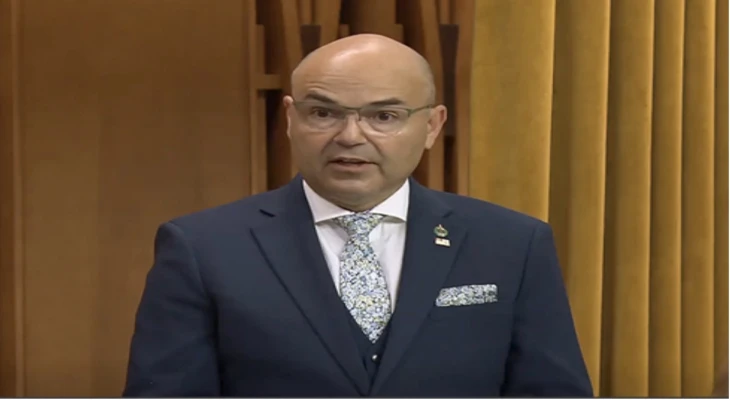
The Shadow Minister for Defense Procurement, Geoff Keeble, said that the visit was the first by a Canadian Prime Minister to the Kingdom in 26 years, but according to his assessment, it ended with a number of promises and negotiations that have not yet reached the stage of final agreements.
The government had announced the signing of 13 trade agreements and memoranda of understanding with a total value exceeding one billion dollars, covering areas such as health technology, mining, infrastructure, and defense.
However, Keeble said the government did not clarify how many of the agreements represent binding commercial contracts, how many are non-binding memoranda of understanding, or the value of the agreements specifically related to Canadian defense industries.
He added that announcing a potential agreement or partnership does not necessarily mean concluding a final contract, demanding that the government disclose what has actually been signed on behalf of Canadians, the jobs, investments, and economic returns expected to result from it.
The visit's outcomes included the commitment of both countries to complete a memorandum of understanding for defense and security cooperation, alongside Canada’s decision to appoint a resident defense attaché in Riyadh to expand bilateral communications and support Canadian defense sector exports.
The two countries also launched negotiations to reach a new agreement to prevent double taxation and pledged to conclude negotiations on an agreement to protect and promote foreign investment by early 2027.
The two sides also signed a memorandum of understanding to establish a Canadian-Saudi coordination council at the level of foreign ministers, tasked with overseeing the development of cooperation in the sectors of trade, energy, technology, education, and defense.
Keeble considered these outcomes to leave questions unanswered, as many of them relate to negotiations or arrangements that are supposed to be completed in the future, not final contracts that have already come into effect.
He accused the government of repeating a pattern based on organizing high-level international visits and announcing broad understandings without providing sufficient evidence of their direct impact on the economy, jobs, supply chains, and national security.
The Conservative MP confirmed that he does not oppose expanding Canada’s relations or seeking new markets and partnerships, but he demanded that the government show measurable results achieved by the visit.
He said Canadians need to know the companies involved in the announced agreements, the value of binding contracts, the number of jobs that will be created within the country, and whether the defense understandings will lead to specific exports or investments.
Keeble linked his criticisms to the economic pressures facing Canadian families and the rising costs of food and living, considering that diplomatic trips should lead to tangible gains that enhance prosperity and security.
On the other hand, the government presented the visit as an important step to diversify Canadian trade away from over-reliance on the United States and open new opportunities for companies in the sectors of critical minerals, energy, artificial intelligence, infrastructure, and defense.
It said that the Saudi market and the economic transformation programs associated with Vision 2030 provide great opportunities for Canadian companies and expertise, and that the announced agreements and negotiations represent the beginning of a broader phase of economic and investment cooperation.
The disagreement between the government and the opposition remains focused on the difference between the political and economic value of the initial announcements and the final results that can be measured through contracts, investments, and actual jobs.
Keeble concluded his statement by demanding that the Prime Minister disclose the details of the thirteen agreements, specify what has been achieved definitively, and what remains merely a memorandum of understanding or future negotiations, questioning when the government will present the full results of the visit to Canadians.












Wednesday, 15 July 2026
Loading...
--°C
--°C
- --%
- -- kmh
- --%