
Arab Canada News – News for the Arab Community in Canada
News
Potential strike at WestJet raises concerns about summer flight disruptions.. What should travelers know?
Around 4,400 flight attendants vote on strike authorization, with any legal action possibly starting from August 2 if negotiations fail
Published: July 15, 2026
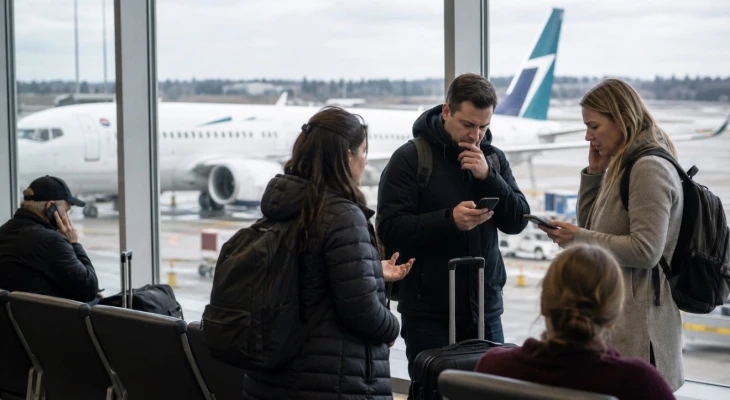
Travel plans for thousands of Canadians during the summer holiday season face increasing uncertainty, as the vote by WestJet flight attendants on granting their union a mandate to strike approaches if ongoing negotiations do not result in a new collective agreement.
About 4,400 cabin crew members working on the company’s mainline flights are participating in the vote, represented by the Canadian Union of Public Employees. The results are scheduled to be announced after the vote closes on July 15.
Approval of a strike mandate does not mean that workers will automatically stop working, but rather grants the negotiating committee the authority to call for labor action later if a settlement cannot be reached.
Under the current legal schedule, the earliest date a legal strike or company-imposed lockout can begin is August 2, 2026, after the completion of the conciliation phase and the cooling-off period stipulated in the federal labor law.
The disputes between the two parties focus on wages, how compensation for working hours is calculated, scheduling, work-life balance, as well as other improvements in working conditions.
The union says that cabin crew perform many tasks before takeoff and after landing, including boarding procedures, safety, and assisting passengers, without receiving adequate compensation for the full time spent performing these duties.
In contrast, WestJet asserts that the current compensation system was approved through collective agreements and complies with federal labor standards. The company’s CEO also rejected the union’s characterization that flight attendants work dozens of hours monthly without pay.
Do disruptions only start on August 2?
Even if the union sets August 2 as the strike start date, the effects of the dispute may appear before that date.
Airlines usually need time to reduce their network and reposition aircraft and crews to specific airports, avoiding passengers and planes being stranded abroad when work stoppages begin.
This may lead to some flights being proactively canceled or consolidated and the number of flights reduced before the official date, especially on international routes or destinations with few alternatives.
However, there are currently no announced general cancellations related to the cabin crew strike, and it is still possible for the parties to reach an agreement preventing a work stoppage.
What should travelers with bookings do?
It is not advisable to cancel the flight immediately just because there is a strike vote, especially if the ticket is non-refundable, as the traveler may lose part of its value as long as the company has not canceled the flight or applied an exceptional change policy.
However, travelers scheduled to fly in early August and beyond should regularly monitor their booking status and ensure that the phone number and email registered with the company are correct, so they receive any notifications related to changes or cancellations.
It is also recommended to review the ticket conditions to know if it can be modified or canceled, and to check whether travel insurance or credit card coverage includes disruptions caused by labor strikes.
Purchasing an alternative refundable ticket may be an option for some with essential trips, such as weddings, cruises, or appointments that cannot be postponed, but this requires carefully weighing the cost and risks.
It is also advisable to avoid booking separate non-refundable flights with different companies on the same itinerary, as cancellation of the WestJet segment may not obligate the other company to refund the separate ticket.
What are passengers’ rights when a flight is canceled?
Disruptions caused by a strike or labor dispute are classified, under Canada’s air passenger protection rules, as circumstances beyond the airline’s control.
In this case, WestJet must rebook the passenger free of charge on the next available flight operated by the company or a partner airline with a commercial agreement, departing within 48 hours of the original flight time.
If it cannot provide a flight within that period, it must arrange travel on any other airline, which may include departing from a nearby airport when this option is available.
If the new travel arrangements no longer fulfill the purpose of the trip, the passenger has the right to a refund for the unused portion of the ticket.
However, classifying the strike as beyond the company’s control means passengers are generally not entitled to fixed cash compensation for delays or cancellations, and Canadian rules do not impose the same obligations regarding food and hotel accommodations that apply to disruptions within the carrier’s control.
Therefore, travelers are advised to keep copies of bookings, notifications, receipts, and any correspondence with the company in case they need to file a claim with the insurance company or a complaint with the Canadian Transportation Agency.
What about package tours and hotels?
Canceling a flight may lead to additional losses related to hotels, cruises, car rentals, and pre-booked events, and the airline is not automatically responsible for all these expenses.
The possibility of refunds depends on the terms of each booking and the insurance used, so it is preferable to contact the hotel or tour company early to learn about change or cancellation options.
Travelers who purchased a full package tour should consult the entity that sold them the package, as their rights and rebooking options may differ from those who bought a standalone airline ticket.
As negotiations continue, a strike remains a possibility, not a certainty. However, its proximity to the long August holiday and peak travel season means any work stoppage could cause widespread disruption, even if it lasts a short time.
Canadian rules require carriers to rebook within 48 hours during labor disruptions, then provide an alternative flight on any carrier if that is not possible, or refund the money when travel is no longer suitable; however, cash compensation for inconvenience usually does not apply to strikes.










Wednesday, 15 July 2026
Loading...
--°C
--°C
- --%
- -- kmh
- --%