
Arab Canada News – News for the Arab Community in Canada
News
Canada raises human rights file during Carney's visit to Saudi Arabia amid efforts to strengthen economic partnership
A historic visit, the first by a Canadian Prime Minister to the Kingdom in 26 years, combining investment, trade, defense accounts, and sensitivity to human rights issues.
Published: July 9, 2026
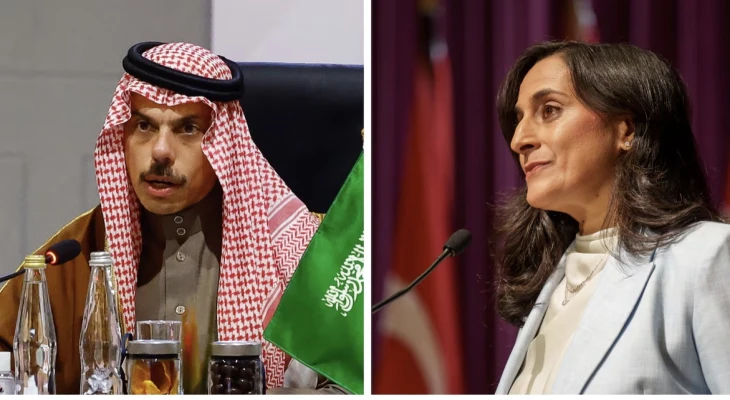
Canada seeks to rebuild its relationship with Saudi Arabia on more realistic and pragmatic foundations, with Prime Minister Mark Carney's visit to Riyadh, a notable diplomatic and economic stop that is the first of its kind by a Canadian head of government to the Kingdom in more than a quarter of a century.
The visit comes at a time when Ottawa is working to diversify its trade and investment partnerships beyond the traditional heavy reliance on the United States, especially amid global trade tensions and the need to open new markets for Canadian companies and investments.
Despite the clear economic nature of the visit, Canada confirmed that it raised concerns related to human rights during communications with the Saudi side, in an attempt to maintain a delicate balance between strategic and economic interests on one hand, and the declared commitments of Canadian foreign policy on issues of freedoms and rights on the other.
Carney is scheduled to meet with Saudi Crown Prince Mohammed bin Salman, where investment, energy, critical minerals, defense, artificial intelligence, and infrastructure files top the agenda, alongside Canadian participation in an investment forum aimed at expanding cooperation between the public and private sectors in both countries.
Ottawa views Saudi Arabia as an important economic partner in the Gulf region, especially with the transformations the Kingdom is witnessing as part of its plans to diversify its economy, reduce dependence on oil, and open the door to foreign investments in mining, technology, clean energy, tourism, and infrastructure sectors.
However, Carney's visit is not separate from a complex history in relations between the two countries. Canadian-Saudi relations experienced a severe crisis in 2018, after public Canadian criticisms of the Kingdom’s human rights record and calls for the release of women's rights activists, which then led to the expulsion of the Canadian ambassador, freezing some trade and investment dealings, and the withdrawal of thousands of Saudi students from Canada.
Despite the later restoration of full diplomatic relations between the two countries, the human rights file remained a sensitive part of any new rapprochement, especially amid international criticisms directed at Saudi Arabia over the past years, including issues of freedom of expression, civil rights, and the killing of journalist Jamal Khashoggi.
Carney’s government today is trying to formulate a different approach based on direct dialogue instead of public confrontation, while keeping the human rights issues raised within diplomatic channels, without allowing them to disrupt the course of economic and security partnership.
This approach reflects a broader shift in Canadian foreign policy, where the government now focuses on building a wider network of international relations in a more turbulent world, attempting to combine national interests with declared political values.
Ottawa recognizes that strengthening the relationship with Riyadh may open wide opportunities for Canadian companies in mining, energy, agriculture, artificial intelligence, and defense industries, but at the same time, it may provoke internal criticism from human rights groups and political parties who believe that economic interests should not overshadow issues of freedoms and rights.
Among these considerations, Carney’s visit appears to be a test of the nature of Canadian foreign policy in the coming phase: Can Canada expand its economic interests with influential regional powers without abandoning its traditional discourse on human rights issues?
If the visit succeeds in launching a new path of economic cooperation, it may represent a turning point in relations between Canada and Saudi Arabia, not only because of the volume of investment opportunities but because it may establish a new model of relations based on managing disagreements calmly, expanding shared interests, and leaving sensitive files open within less confrontational and more continuous diplomatic channels.













Thursday, 09 July 2026
Loading...
--°C
--°C
- --%
- -- kmh
- --%