
Arab Canada News – News for the Arab Community in Canada
News
Meta invests over $13 billion to build its first data center in Canada
The massive project in Alberta reflects the race of technology companies on AI infrastructure and sparks a discussion about energy, the environment, and job opportunities
Published: July 9, 2026
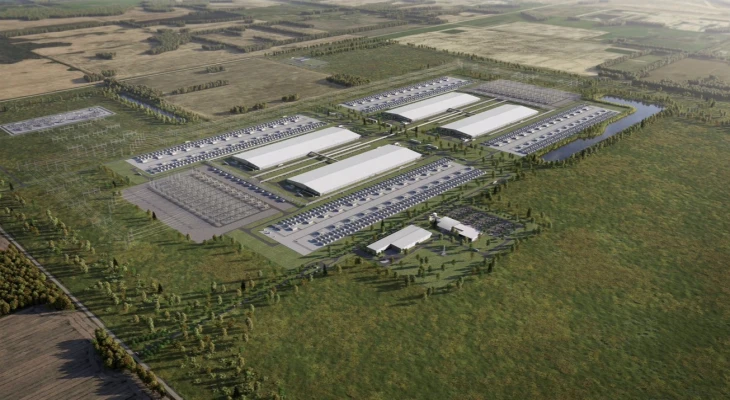
Meta announced an investment exceeding 13 billion Canadian dollars to build its first data center in Canada, in a move considered one of the largest private sector investments in the country's history, reflecting the significant acceleration in global spending on the infrastructure needed to operate artificial intelligence systems.
The new center will be established in the Sturgeon County area in Alberta province, north of Edmonton city, to be Meta's first facility of its kind within Canada, and the company's largest data center outside the United States.
The project represents part of an escalating race among major technology companies to expand their computing capabilities, with increasing demand for massive data centers capable of running advanced AI models and large-scale digital services.
The project covers an area of about 2.9 million square feet, on a large land designated for technical infrastructure, while estimates indicate that the construction process will provide thousands of jobs during peak implementation, before the center later moves to the operational phase which will create hundreds of permanent jobs.
The Alberta government welcomed the project, considering it to enhance the province's position as an emerging hub for technological investments, especially given its possession of extensive energy resources, suitable lands for large projects, and a relatively cold climate that helps reduce cooling costs in data centers.
Through this type of project, Alberta seeks to expand its economy beyond the traditional oil and gas sector, and attract global technology companies to the fields of cloud computing, artificial intelligence, and advanced digital infrastructure.
However, the project is not without environmental and economic questions, as giant data centers require large amounts of electricity to operate servers and cooling systems, opening a discussion about the source of energy used, carbon emissions, and the capacity of power grids to accommodate the increasing demand.
Meta says the center will rely on more water-efficient cooling systems, and that it will support the development of local infrastructure related to energy and services, in an attempt to reduce environmental impacts and ease pressure on local resources.
The project's energy plans are also linked to a new natural gas power plant, along with temporary arrangements to provide electricity during the initial operational phases, which raises a broader discussion about balancing attracting AI investments and committing to emission reduction goals.
The investment comes at a time when Meta is significantly increasing its capital expenditure to support its AI ambitions, amid fierce competition with companies like Google, Microsoft, OpenAI, and Anthropic, which are also pumping billions of dollars into data centers, chips, and cloud infrastructure.
Supporters of the project believe it will give Alberta a strong boost in the technology sector, enhance local revenues, and open the door for additional investments in digital infrastructure. On the other hand, critics warn that such projects may consume huge amounts of energy and water, while not always providing a number of jobs proportional to the announced investment size.
Nevertheless, Meta's entry at this scale into the Canadian market represents an important shift in the country's data center map, confirming that Canada has become part of the accelerating global AI infrastructure, where competition is no longer limited to developing models and software, but extends to who has the capacity to provide energy, land, infrastructure, and computing power needed to operate the digital future.














Thursday, 09 July 2026
Loading...
--°C
--°C
- --%
- -- kmh
- --%