
Arab Canada News – News for the Arab Community in Canada
News
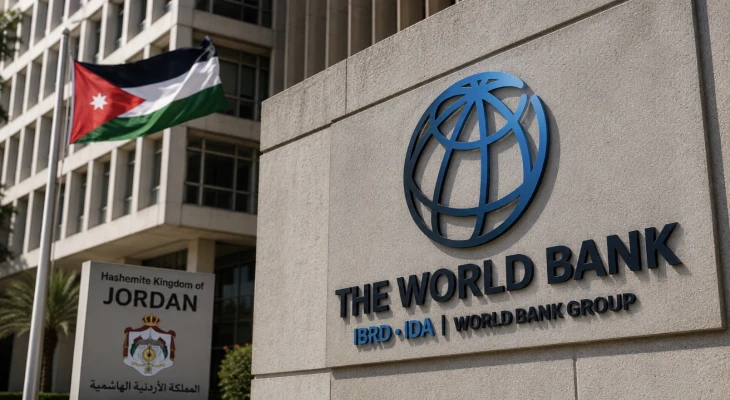
Jordan moves to the upper-middle-income category in the World Bank classification
The new update is based on the increase of per capita gross national income to $5260 and the adjustment of national accounts reflecting a larger economy size.
Published: July 4, 2026
The World Bank announced the official transition of Jordan from the lower-middle-income category to the upper-middle-income category, as part of the annual update of income classifications for the fiscal year 2027.
The new classification came after Jordan's gross national income per capita, according to the "Atlas method" adopted by the World Bank, reached about 5260 US dollars, exceeding the minimum required threshold to enter the upper-middle-income category, which is 4636 dollars.
This transition is an important economic indicator in terms of reading the size of the economy and income level according to international standards, but it does not necessarily mean an immediate and direct improvement in the living standards of all citizens, as the classification depends on averages and aggregate indicators that may not equally reflect the conditions of individuals and families.
According to the data related to the update, the revision of national accounts in Jordan contributed to raising the official estimates of the size of the economy, after updating the base year and expanding the scope of statistical coverage. This update showed that the Jordanian economy is about 10% larger compared to previous estimates, which was reflected in the calculation of the gross national income per capita.
The relatively stable performance of the Jordanian economy also helped support this classification, amid the continued resilience of several sectors, improvement in exports, and maintaining stability in macroeconomic indicators, despite regional pressures and challenges related to energy costs, financing, and unemployment.
The new classification places Jordan within a broader segment of economies that have surpassed the lower-middle-income threshold, which may in the future reflect on the nature of dealings with international financial and development institutions, whether in terms of financing conditions, the quality of available programs, or economic cooperation tools.
However, this transition simultaneously poses an additional challenge for decision-makers, as the requirement becomes that the classification should not remain merely a statistical improvement, but rather transform into more inclusive growth that reflects on job opportunities, income levels, investment, and the quality of public services.
The World Bank issues its annual classifications based on gross national income per capita in US dollars, using the "Atlas method," a methodology aimed at reducing the impact of sharp fluctuations in exchange rates and inflation when comparing income levels between countries.
Thus, Jordan enters the World Bank's new fiscal year with a higher classification, a step that carries a positive indication of the level of official economic indicators, but it still needs practical translation within the real economy so that citizens can feel its impact in their daily lives.













Saturday, 04 July 2026
Loading...
--°C
--°C
- --%
- -- kmh
- --%