
Arab Canada News – News for the Arab Community in Canada
News
Wildfires turn Quebec's day into darkness and cause a rare thunderstorm
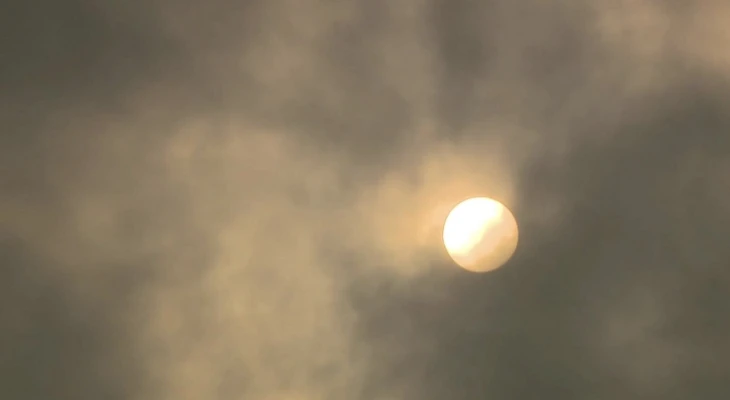
Thick smoke clouds blocked the sunlight, while the intense heat generated a storm accompanied by thunder and lightning over the fire area.
Published: July 15, 2026
Daylight turned into something resembling night darkness in parts of Quebec province, after thick clouds of smoke and ash covered the sky coinciding with the intensification of forest fires and the formation of a thunderstorm generated by the fires themselves.
Residents described the scene as strange and worrying, after visibility suddenly decreased and the sky turned dark during daylight hours, while lightning flashes appeared within the rising clouds above the fire areas.
What happened was not a traditional thunderstorm, but a rare atmospheric phenomenon known as a fire thunderstorm, which occurs when the immense heat from a severe fire pushes large amounts of hot air, smoke, and moisture into the upper layers of the atmosphere.
As this air rises rapidly, a massive cumulonimbus cloud forms that may produce thunder, lightning, rain, and strong winds, similar to usual summer storms, but its main energy source is the fire rather than just the heat of the earth's surface.
This phenomenon is dangerous because it can increase the difficulty of controlling the fires, as downdrafts from the cloud can suddenly change the fire's direction, while the lightning it produces can ignite new fires far from the original fire center.
Updrafts also carry smoke and ash to great heights, allowing them to spread over wide areas, leading to deteriorated air quality, blocking sunlight, and turning the sky to dark or orange colors.
Forest fires in Quebec witnessed rapid expansion during July, after high temperatures, dry vegetation, and weather conditions helped ignite and spread fires in multiple areas of the province.
The effects of the smoke extended beyond the direct fire areas, as air quality was affected in Ottawa and eastern and southern Ontario, with health warnings urging residents to reduce outdoor activities and limit exposure to fine particles.
Children, the elderly, pregnant women, and those with heart or lung diseases are more vulnerable to the effects of fire smoke, which may cause eye and throat irritation, headaches, coughing, and difficulty breathing.
Residents in affected areas are advised to close windows and doors, operate air purification systems if available, avoid strenuous outdoor exercises, and use N95 masks when needing to stay outdoors.
The Quebec incident reveals the ability of severe forest fires to create their own weather conditions, transforming the scene within minutes from an ordinary summer day to a dark sky filled with smoke clouds, thunder, and lightning.













Wednesday, 15 July 2026
Loading...
--°C
--°C
- --%
- -- kmh
- --%