
Arab Canada News – News for the Arab Community in Canada
News
In a Quebec town on the border.. the trade war changes Canadians' view of the American neighbor
Stansted residents move from temporary anxiety to caution and quiet boycott, after fees and political threats turned into a rift affecting travel, shopping, and daily relationships
Published: July 20, 2026
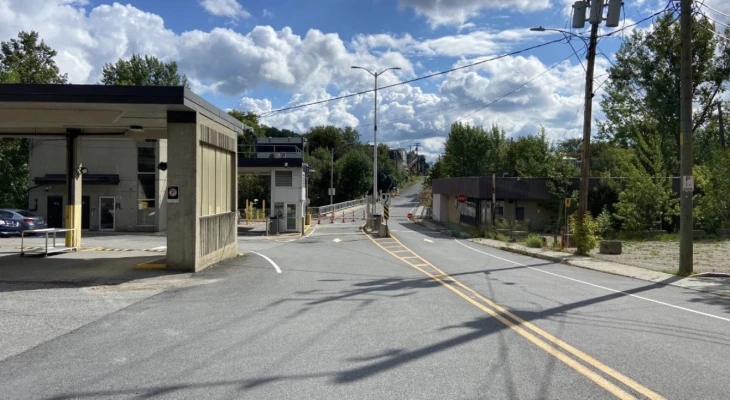
The border between Stanstead in southern Quebec and Derby Line in the U.S. state of Vermont was, for the residents of the two towns, not so much a line separating two worlds as it was an administrative detail passing through one community.
Families on both sides of the border, friendships spanning generations, shared services and facilities, American stores accustomed to welcoming Canadian customers, and residents crossing over to meet daily needs that required only a short car trip.
But the trade war ignited by the administration of U.S. President Donald Trump, along with repeated political threats to Canada, began to change this relationship in a way that neither geography nor historical ties could prevent.
After an initial belief that the tension would not last long, and that the dispute was limited to the two governments and did not target the two peoples, many residents of the area now treat the crisis as a deeper shift in the Canadian–American relationship, not just a temporary round of trade negotiations.
From Concern to Loss of Trust
In the early months of the escalation, many residents of the border areas in Quebec were keen to separate Americans from Trump’s policies.
The repeated message was that the objection was directed at the U.S. administration, its tariffs, and its political rhetoric, not at the neighbors and friends on the other side.
But the continuation of threats, the imposition of tariffs on Canadian sectors, and the repeated talk of annexing Canada and turning it into the "51st state" gradually weakened this separation.
The anger in Stanstead did not necessarily turn into personal hostility toward Vermont residents, but it produced a deeper sense of caution and led some Canadians to reconsider habits that seemed entrenched: shopping in the United States, spending holidays there, buying American products, and even attending events in the neighboring towns.
For some residents, boycotting became a practical way to express their rejection, instead of merely following government statements or waiting for the results of negotiations.
Fewer Trips South
One of the clearest changes is the decline in the number of Canadians crossing the border into the United States.
The crossing, which used to witness regular movement of shoppers and visitors, has become quieter, while business owners in Vermont towns noticed a decrease in the number of cars with Quebec plates and a decline in hearing French inside restaurants and shops.
This decline is not only related to tariffs but to a complex set of factors: the weakness of the Canadian dollar, rising prices, concerns about U.S. border and immigration procedures, in addition to the political desire to keep money within the Canadian economy.
For Stanstead residents, crossing to buy fuel, food, or spend an evening on the American side is no longer a completely neutral decision but carries political and economic meaning that was not present to the same extent before.
The paradox is clearly evident in nearby American communities; the tariffs, presented as a means to protect the American economy, have begun to harm stores and restaurants that have depended for decades on Canadian visitor spending.
One Community Divided by Politics
Stanstead represents a unique model of the interconnectedness between the two countries.
The Quebec town lies directly opposite Derby Line, with streets crossing the border in the middle, so that some Canadians and Americans live on both sides of the same road.
The two areas also share links in water and sewage services, sports, emergency response, as well as a long history of family visits and local cooperation.
The Haskell Free Library and Opera House symbolizes this relationship; the building was constructed over the border itself, with the international line running through its halls, so a visitor can stand in Canada and the United States inside the same building.
However, the tightening of U.S. restrictions on Canadians entering the library from the American side stirred strong feelings in both communities and became, for many, a symbol of the border’s transformation from a point of connection to a more visible barrier.
The dispute is no longer limited to customs tariffs calculated at ports and factories but has extended to a cultural institution originally established to bring the two towns’ residents closer.
The Local Economy Pays the Price
The economy of Stanstead and surrounding areas is naturally linked to cross-border trade, especially the granite sector for which the town is famous, alongside small businesses, transportation, tourism, and services.
American tariffs worry companies exporting products to the U.S. market, not only because of the direct cost but also due to the unpredictability of future decisions.
Companies can deal with a known and stable tariff, even if painful, but face greater difficulty when threats, rates, and exemptions change frequently.
This uncertainty may lead companies to postpone investment and hiring, seek alternative markets, or reorganize supply chains to reduce dependence on the United States.
On the American side, businesses near the border suffer from a decline in Canadian visitors, making the loss mutual even when tariffs are officially directed at Canadian imports.
Thus, small towns find themselves paying the price for decisions made in Washington and Ottawa, even though their residents built their lives on the assumption that the border would remain open, stable, and predictable.
Canadian Buying Becomes a Statement
The trade war has led to increased calls within Canada to buy national products and reduce dependence on American goods.
Initially, some considered these calls an emotional reaction that might fade after weeks. But the ongoing crisis has turned it in some communities into a more stable consumer habit.
Consumers now scrutinize the country of origin, look for Canadian alternatives, and reconsider travel plans south, even when American options are cheaper or geographically closer.
Families cannot entirely do without American products due to intertwined supply chains, and many goods manufactured in Canada contain American components.
Nevertheless, this shift carries political significance; it reflects declining confidence that trade relations between the two countries will simply return to what they were once a tariff is removed or a temporary agreement is reached.
Anger at the Administration, Not the Neighbors
Despite the change in general mood, personal ties between Stanstead and Derby Line residents remain strong.
Many Canadians know that local American store owners and families do not control White House decisions, that some oppose the tariffs and annexation rhetoric, and feel embarrassed by the deterioration of relations.
Local officials in Vermont and Quebec have also tried to maintain channels of cooperation and emphasize that community relations should not be held hostage to federal policies.
But separating the administration from the people has become more difficult as the dispute drags on, especially when U.S. election results directly affect Canadians’ lives.
For some residents, the question is no longer just about what Trump wants but whether the American political system can provide a stable relationship that Canada can rely on in the future.
Canada Recalculates Its Economic Relationship
At the national level, the trade war has pushed the government and companies to accelerate the search for markets outside the United States, strengthen interprovincial trade, and increase investment in local industries.
Canada cannot quickly replace the American market, given the volume of trade and the interconnection of energy, automotive, metals, agriculture, and manufacturing sectors.
But the mood shift within Stanstead reflects a broader debate taking place across the country: Should Canada continue building an economy that assumes a stable American relationship, or should it treat Washington as an important but uncertain partner?
Goods trade between the two countries declined in 2025 under pressure from tariffs and uncertainty, while the share of other markets in Canadian exports rose to its highest levels in decades.
These developments indicate that the crisis has begun to change economic behavior, even as most goods compliant with the Canada-United States-Mexico Free Trade Agreement continue to enter without tariffs.
A Rift That May Persist After Tariffs End
Tariffs can be canceled by political decision or negotiated agreement, but restoring trust may take longer.
The Canadian tourist who found an alternative within their country may not quickly return to the United States, the consumer accustomed to buying Canadian products may stick to their choice, and the company that found a new market may not want to fully readopt the American customer.
In Stanstead, residents still view Derby Line as a neighboring community with which they share real historical and human ties.
But the border, which previously seemed a symbolic line, has become more present in daily consciousness, and crossing to the other side has become a decision to be considered rather than an automatic habit.
The town’s story reveals that the most dangerous effects of the trade war may not only be in export values or job numbers but in the slow change it causes in a people’s view of their closest allies.
Tariffs can end, negotiations can resume, but the feeling that the old relationship is no longer guaranteed has become a new reality in one of the Canadian towns most connected to the United States.












Tuesday, 21 July 2026
Loading...
--°C
--°C
- --%
- -- kmh
- --%