
Arab Canada News – News for the Arab Community in Canada
News
The United States launches new strikes on Iran and the Revolutionary Guard closes the Strait of Hormuz until further notice
The escalation came after targeting a container ship flying the flag of Cyprus and the loss of one of its crew members, amid fears of the confrontation expanding and global navigation being d
Published: July 11, 2026
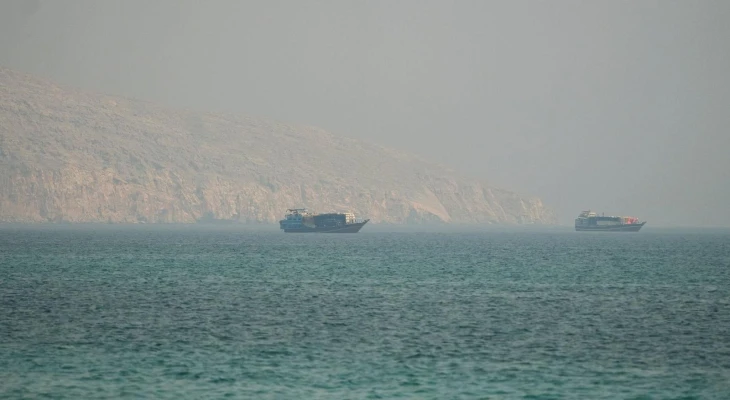
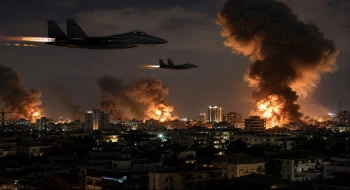
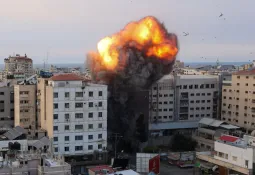
The confrontation between the United States and Iran has entered a new phase of escalation, after the US Central Command announced the start of a new round of strikes against Iranian targets, in response to the targeting of a civilian container ship while passing through the Strait of Hormuz.
The US command said that the ship GFS Galaxy, flying the flag of Cyprus, was attacked by forces belonging to the Iranian Revolutionary Guard, which led to a fire on board and severe damage to the engine room, rendering it unable to continue its journey.
It added that one of the civilian crew members is still missing, while emergency teams continue to deal with the aftermath of the fire and the damage sustained by the ship.
The Central Command explained that the new strikes aim to reduce Iran's ability to attack commercial ships and civilian sailors, confirming that the operations were carried out under the direction of the US President in his capacity as Commander-in-Chief of the Armed Forces.
The US statement accused Tehran of once again failing to adhere to understandings related to stopping attacks on ships and ensuring freedom of navigation in the strait, noting that Washington had given it an additional opportunity to prove its commitment before resuming the strikes.
In contrast, the Iranian Revolutionary Guard presented a different account of the incident, saying that the ship attempted to cross the strait via an unauthorized route, and that naval forces fired warning shots before forcing it to stop.
Following the incident, the Revolutionary Guard announced the closure of the Strait of Hormuz until further notice, linking its reopening to the cessation of what it described as illegal American interference in the region.
The Iranian naval force confirmed that it will not allow any ship or marine vehicle to pass through the strait during the closure period, warning that any attempt to challenge the decision may face a military response.
The Strait of Hormuz is considered one of the most important maritime passages in the world, as a large percentage of oil and gas exports from Gulf countries pass through it, making any disruption to navigation there a direct threat to energy supplies and international trade.
The Iranian announcement raises concerns about rising oil and fuel prices, increased shipping and insurance costs, especially if the closure lasts longer or the confrontation expands to include additional ships and military bases in the region.
The escalation also increases the likelihood of a broader direct confrontation between US and Iranian forces, amid Washington's insistence on freedom of international navigation and Tehran's insistence on imposing its own routes and security controls within the strait.
These developments come despite ongoing indirect diplomatic contacts between the two sides, and regional attempts to revive calm and prevent intermittent clashes from turning into an open war.
With the start of a new round of US strikes and Iran's announcement of the closure of the strait, the crisis has gone beyond direct political and military disagreement to become a broad threat to navigation security, energy, and the global economy.









Sunday, 12 July 2026
Loading...
--°C
--°C
- --%
- -- kmh
- --%