
Arab Canada News – News for the Arab Community in Canada
News
Collapse of the ceasefire between Washington and Tehran after American strikes and Iranian response in the Gulf
Trump announces the end of the détente with Iran amid a new military escalation raising fears of an expanded confrontation and increased risks to energy security and navigation.
Published: July 8, 2026
US President Donald Trump announced that the ceasefire with Iran is no longer in effect, following a new military escalation that has returned the crisis between Washington and Tehran to a highly dangerous stage.
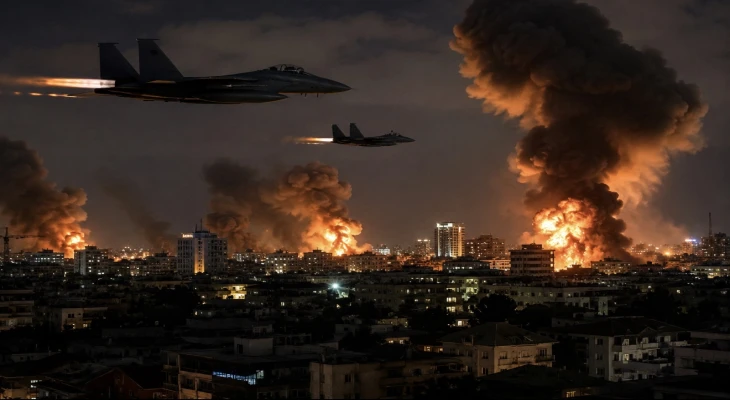
The announcement came after the United States carried out strikes targeting sites inside Iran, in a move Washington said was in response to Iranian threats and movements, while Tehran responded by targeting sites and bases hosting American forces in the Gulf region.
The Iranian attacks included sites in Bahrain and Kuwait, raising the security alert level in the region, especially with the presence of military bases and vital facilities near international energy routes.
Trump said that the path of de-escalation has practically ended, considering that Iran has crossed the limits of the agreement, and that the United States will not allow its forces or interests in the region to be targeted without response.
On the other hand, Tehran confirms that its strikes were in response to the American attack, describing its movements as defensive and limited, but at the same time warned that any additional attacks will be met with a broader response.
This escalation raises increasing fears of the crisis turning into a wider regional confrontation, especially given the sensitivity of the Gulf region and its importance to global oil supplies, in addition to the proximity of several military bases and oil facilities to areas of tension.
The developments also quickly reflected on the markets, with rising concerns about energy supply disruptions and rising oil prices, at a time when Western and Gulf capitals are monitoring the possibility of an expansion of operations or targeting navigation in the Strait of Hormuz.
International and regional parties are trying to contain the situation through urgent communications, but the chances of a quick return to a ceasefire seem limited amid mutual accusations and increasing internal pressures on both sides to show firmness.
The collapse of the de-escalation places the region before an open phase with multiple possibilities, between a calculated escalation that each side seeks to control its limits, or a wider confrontation whose effects may extend to regional security, energy markets, and the global economy.











Wednesday, 08 July 2026
Loading...
--°C
--°C
- --%
- -- kmh
- --%