
Arab Canada News – News for the Arab Community in Canada
News
Carney: Trump "won the argument" regarding increased defense spending in NATO
The Canadian Prime Minister acknowledges that Washington's pressure has changed the allies' calculations, affirming that Canada is proceeding with increasing its defense spending amid escalat
Published: July 8, 2026
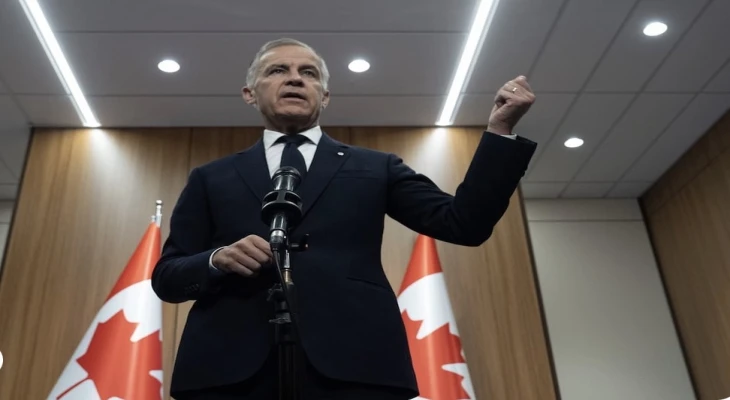
Canadian Prime Minister Mark Carney said that US President Donald Trump "won the argument" on the issue of increasing defense spending within NATO, indicating that Washington's repeated pressure on allied countries pushed NATO to review its defense commitments and move towards higher financial targets.
Carney's remarks came on the sidelines of the NATO summit, where defense spending became the forefront of discussions among alliance leaders, amid escalating security threats and growing conviction that the Western defense structure can no longer rely solely on political promises without actual long-term investments.
Carney acknowledged that Trump succeeded in imposing this discussion within the alliance, after years of pressuring member states to increase their defense contributions and reduce reliance on the United States to bear the majority of collective security burdens.
However, the Canadian Prime Minister also tried to place the issue within a broader framework than just responding to American pressure, pointing out that the ongoing shift within NATO also reflects a real change in the global security environment, from the war in Ukraine to tensions in the Middle East, passing through strategic competition with Russia and China.
Carney's statements come at a time when Canada is moving to accelerate its defense plans, after facing repeated criticism over the past years due to its delay in reaching NATO's previous target of spending 2% of GDP on defense.
The Canadian government confirms that the new phase requires broader investments in the armed forces, equipment modernization, enhancing capabilities in the Arctic, developing local defense industries, alongside supporting infrastructure related to national security.
The new direction within NATO also includes a broader goal of raising defense and security commitments to 5% of GDP by 2035, to be distributed between direct defense spending and investments related to security, infrastructure, and strategic capabilities.
Carney's position carries a notable political recognition that Trump's rhetoric, despite the tension it caused within the alliance, succeeded in pushing member states to take the issue of sharing defense burdens more seriously.
However, this shift places Canada before a major domestic challenge, as raising defense spending to this extent will require difficult financial decisions and clear prioritization between defense, public services, and the economy, at a time when the government faces increasing budget pressures.
Observers see Carney's statements as an attempt to achieve a delicate balance between maintaining the relationship with Washington and presenting Canada as a committed ally within NATO, without appearing as if Ottawa is moving only under pressure from the US president.
While member states continue to discuss mechanisms for implementing the new commitments, it seems that the defense spending issue is no longer a postponed matter within the alliance, but has become an essential part of defining political and military commitment in a more turbulent and complex international phase.













Wednesday, 08 July 2026
Loading...
--°C
--°C
- --%
- -- kmh
- --%