
Arab Canada News – News for the Arab Community in Canada
News
The Iranian Revolutionary Guard announces the closure of the Strait of Hormuz until further notice after intercepting a ship
Tehran links reopening the corridor to stopping American intervention, while the escalation threatens navigation and global energy supplies
Published: July 11, 2026
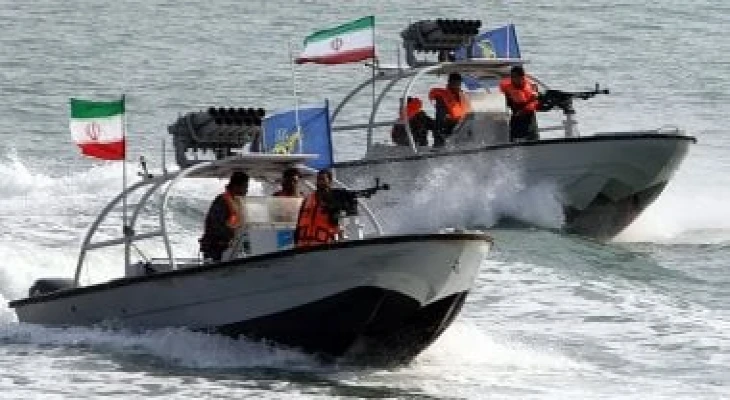
The naval force of the Iranian Revolutionary Guard announced the closure of the Strait of Hormuz to ship traffic until further notice, following a maritime incident in which it said a ship tried to cross the strategic passage via an unauthorized route.
The Revolutionary Guard explained that its forces intercepted the ship after it deviated from the routes designated by the Iranian authorities, and fired warning shots to force it to stop and comply with maritime instructions.
The statement accused several foreign ships of attempting to use unauthorized routes to cross the strait, considering these moves part of external interference aimed at undermining the security arrangements that Tehran seeks to impose in the region.
The Revolutionary Guard confirmed that it will not allow any ship or marine vehicle to pass through the strait until what it described as the regional interference of the United States stops, warning that any attempt to enforce navigation by force will face an Iranian response.
The announcement comes at a time when the Strait of Hormuz is witnessing escalating tension, after several commercial ships were attacked and damaged in recent days, coinciding with the exchange of strikes between the United States and Iran and the collapse of the truce that had temporarily halted the fighting.
The strait represents one of the most important maritime energy passages in the world, as huge quantities of oil and gas exports from Gulf countries pass through it, making any disruption to navigation there have an immediate impact on energy prices and global supply chains.
It is not yet clear how capable Iran is of implementing a full and continuous closure of the strait, given the US military presence in the region and Washington’s refusal to grant Tehran sole authority over international navigation routes.
The United States had demanded that Iran guarantee the freedom of passage for ships through all maritime passages without imposing restrictions or fees, while Tehran insists that any crossing must be carried out according to the security controls and routes it defines.
The announcement threatens to open a new round of confrontation, especially if commercial ships or foreign naval forces try to challenge the closure decision, which could lead to direct military clashes in one of the most sensitive maritime passages in the world.
Alongside the field escalation, diplomatic communications continue between Washington and Tehran through regional intermediaries, despite US President Donald Trump’s announcement that the previous ceasefire has ended.
Trump had confirmed that the United States will continue talks with Iran, but at the same time stressed that US forces will respond to any attacks targeting ships or US interests in the region.
The announced closure of Hormuz places global markets before a new phase of uncertainty, as continued disruption or an expansion of the confrontation could lead to higher oil and fuel prices and increased shipping and insurance costs, with repercussions that may extend to inflation and the global economy.









Sunday, 12 July 2026
Loading...
--°C
--°C
- --%
- -- kmh
- --%