
Arab Canada News – News for the Arab Community in Canada
News
Spain defeats Argentina and wins the World Cup for the second time
Ferran Torres decides the final in extra time, and "La Roja" regains the title after 16 years and ends Messi's dream of retaining the cup.
Published: July 19, 2026
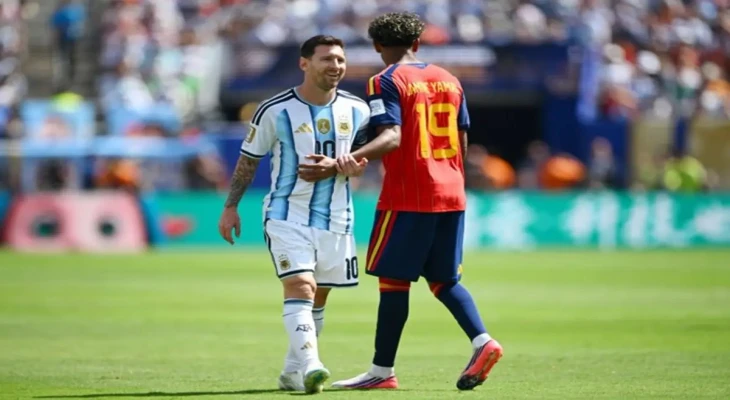
The Spanish national team crowned itself the champion of the 2026 World Cup, after defeating its Argentine counterpart 1-0 following extra time, in an exciting final held on Sunday evening at the New York–New Jersey stadium in East Rutherford.
Ferran Torres scored the only goal of the match in the 106th minute, granting Spain its second world title after its historic first triumph in South Africa in 2010.
The goal came after Argentina finished the match with ten players, following midfielder Enzo Fernández receiving a second yellow card and being sent off in stoppage time of the second half.
The Spanish team succeeded in turning its field superiority into a decisive goal during the first extra half, ending the resilience of Argentine goalkeeper Emiliano Martínez, who kept his country in the match with successive saves.
Spanish dominance and Argentine resilience
Spain imposed its style from the first minutes, controlling the ball and pressing the Argentine defense through quick movements and short passes, benefiting from the activity of Lamine Yamal, Dani Olmo, and Mikel Oyarzabal.
On the other hand, Argentina relied on defensive organization and attempted to launch counterattacks, searching for Lionel Messi and Julián Álvarez in the forward areas.
The Argentine team faced difficulty building attacks under Spanish pressure, while its players had to retreat for long periods in front of the density of passes and midfield players' movements.
Spain had several chances during regular time, but goalkeeper Martínez excelled in protecting his goal, and the Spanish forwards lacked the final touch against the solid Argentine defense.
The first half ended goalless, with neither team managing to break the balance, despite Spain's clear superiority in possession and chance creation.
The same scenario continued during the second half, with increased Spanish pressure and Argentina retreating to maintain the draw and wait for a surprise opportunity.
Enzo's red card changes the course of the final
Argentina's situation became complicated in the final minutes of regular time when Enzo Fernández received his second yellow card after a foul against Spanish defender Pau Cubarsí.
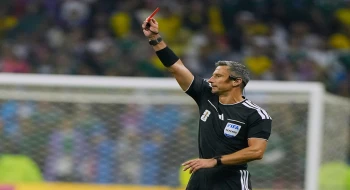
The Slovenian referee Slavko Vinčić showed the red card, sending Argentina into extra time with ten players against a Spanish team that was already controlling most of the match.
Coach Lionel Scaloni tried to reorganize his lines and close spaces, while Spain intensified its pressure seeking a goal to avoid penalties.
The Argentine defense remained resilient during the first minutes of extra time, and the referee disallowed a Spanish goal after a foul was called before the ball reached the net.
But the continuous Spanish pressure paid off in the 106th minute, when Ferran Torres managed to score the leading goal, sparking celebrations among Spanish fans in the stands.
Argentina tried to advance in search of an equalizer during the second extra half, despite the numerical disadvantage and fatigue, but the Spanish defense maintained its focus and closed the spaces leading to its goal.
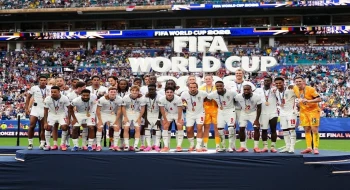
With the final whistle, the Spanish players began their celebration of the title, while shock fell over the Argentine team that was seeking to retain the title and win the World Cup for the second consecutive time.
Spain's second title
The victory ended Spain's 16-year wait since lifting the World Cup for the first time in 2010, when it defeated the Netherlands with Andrés Iniesta's goal in extra time.
The triumph confirms the rise of a new Spanish generation combining experience and youth, continuing the series of successes the team has achieved in recent years.
The Spanish team entered the tournament as one of the top contenders and delivered a strong performance in the knockout stages, overcoming Austria, then Portugal and Belgium, before defeating France 2-0 in the semifinal.
The team showed the ability to control the pace of matches, with defensive solidity and multiple attacking options, before crowning its journey by defeating the defending champion in the final.
The win also gave coach Luis de la Fuente a new historic achievement, after leading the team to the pinnacle of world football relying on a mix of young players and experienced veterans.
A painful end to Argentina's dream
On the other hand, Argentina's attempt to become the first team to retain the World Cup since Brazil in 1962 ended.
The defending champion reached the final after an exciting journey, during which it overcame Cape Verde, Egypt, and Switzerland, before overturning a deficit against England to win 2-1 in the semifinal.
However, the Argentine team could not impose its attacking style or provide enough space for Messi in the final, amid Spanish pressure and defensive discipline that limited his threat.
The match represented a new historic milestone in Messi's career, who played the final at the age of 39 but failed to add a second World Cup to the title he won in Qatar in 2022.
Despite the loss, Argentina finished the tournament in second place after reaching the final for the second consecutive time, confirming its continued status among the world's top football powers.
As for Spain, it left the tournament with its second cup in history, after a final characterized by patience, control, and discipline, decided by Torres' goal which will remain one of the most prominent moments in Spanish football history.











Monday, 20 July 2026
Loading...
--°C
--°C
- --%
- -- kmh
- --%