
Arab Canada News – News for the Arab Community in Canada
News
US security warnings include 15 destinations in the Middle East, including Saudi Arabia and Bahrain
Washington calls for avoiding travel to Lebanon and Iraq and reconsidering visits to several Gulf countries, amid fears of sudden escalation and flight disruptions

Published: July 18, 2026
American embassies in several Middle Eastern countries have issued new security alerts, urging American citizens to exercise the utmost caution amid ongoing regional tensions and the possibility of sudden military escalation.
The alerts issued by the United States embassies in Lebanon, Iraq, Bahrain, and Saudi Arabia included similar guidelines, such as following local news, being prepared to adjust travel plans, continuously checking flight schedules, and following local authorities' instructions in the event of attacks or security alerts.
The embassies warned that regional developments could lead to airspace closures, flight cancellations, and rerouting without prior notice, in addition to imposing restrictions on movement or access to airports and border crossings.
They also advised American nationals to familiarize themselves in advance with the nearest shelter or safe location, keep travel documents, medications, and essential needs in an easily accessible place, and have an emergency plan that does not rely entirely on assistance from the U.S. government.
Different levels and not a unified ban
The warnings do not represent a single American decision to ban travel to all Middle Eastern countries, as the Department of State sets an independent level for each country according to the nature of the risks and the United States' ability to provide consular services there.
The fourth level, "Do Not Travel," is the highest level of American warning, while the third level means travelers should "Reconsider Travel." The second level calls for increased caution.
Washington places Lebanon and Iraq at level four and asks American citizens not to travel to them due to risks including armed conflict, terrorism, kidnapping, civil unrest, and the limited ability of U.S. missions to provide assistance in emergencies.
The travel warning for Lebanon covers the entire country amid the possibility of renewed fighting or attacks without warning, and disruptions to roads, airports, and crossings.
As for Iraq, the U.S. guidelines point to risks of terrorism, kidnapping, armed conflict, and unrest, along with security restrictions faced by American employees working in the country.
Reconsider travel to Saudi Arabia and Bahrain
The U.S. Department of State classifies Saudi Arabia and Bahrain at level three and urges its citizens to reconsider travel to them due to risks of armed conflict, missile and drone attacks, terrorism, and disruptions to air traffic.
In Saudi Arabia, the warning also includes local laws and potential restrictions on leaving the country, while the area near the Yemeni border is classified at level four, with a recommendation not to travel there for any reason.
The guidelines warn of the possibility of targeting cities, airports, military, diplomatic, and energy facilities, in addition to locations frequented by foreigners, public gatherings, shopping centers, and transportation.
In Bahrain, U.S. authorities indicate the continued risk of attacks related to regional tensions and the possibility of targeting government and military facilities, tourist sites, markets, transportation centers, and places of worship.
15 destinations on the regional crisis page
The U.S. consular information page for the Middle East includes 15 countries and regions: Bahrain, Lebanon, Egypt, Oman, Iran, Qatar, Iraq, Saudi Arabia, Israel, the West Bank and Gaza Strip, Syria, Jordan, the UAE, Kuwait, and Yemen.
However, listing these destinations on one page does not mean they are all subject to the same level or that their warnings were issued at the same time.
Some countries and regions are classified at the "Do Not Travel" level, while others are subject to "Reconsider Travel" or "Exercise Increased Caution," and there may be areas within a single country with a higher risk level than other parts.
For example, Washington calls for reconsidering travel to Israel and the West Bank, while requesting no travel to the Gaza Strip and some border areas.
Iran, Syria, and Yemen are also subject to strict travel warnings due to the absence or limited availability of U.S. consular services and the dangers of conflicts, arrests, and kidnappings.
Concerns about air traffic disruption
The new alerts focused on the possibility of disruption to civil aviation due to airspace closures, changes in missile and drone flight paths, or escalation of military operations.
Travelers were asked to contact airlines directly instead of going to airports before confirming their flights are operating, as U.S. embassies cannot guarantee seats or evacuation flights if commercial flights stop.
Citizens who decide to stay in the region were also advised to register their information in the Smart Traveler Enrollment Program so embassies can send urgent alerts and communicate with them if necessary.
The guidelines emphasize that the security situation in the Middle East can change rapidly, and areas that appear stable may be affected within hours by airspace closures, attacks, protests, or security restrictions.
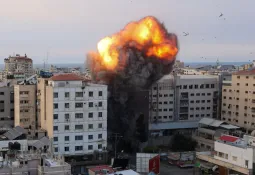
The warnings come at a time when the region is witnessing ongoing military escalation and exchanges of threats, increasing the risks of the conflict spreading to countries hosting U.S. bases or interests, and placing air travel and vital facilities under intense security monitoring.











Saturday, 18 July 2026
Loading...
--°C
--°C
- --%
- -- kmh
- --%