
Arab Canada News – News for the Arab Community in Canada
News
Trump announces a US plan to impose a blockade on Iran in the Strait of Hormuz and impose fees for safe passage
The American president says that Washington will take responsibility for protecting commercial ships in the strait, amid uncertainty about the implementation mechanism and escalating risks of
Published: July 13, 2026
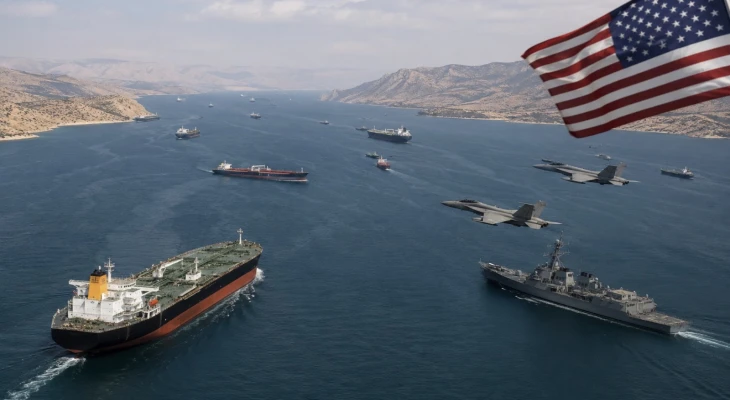
US President Donald Trump announced that the United States intends to impose a naval blockade on Iran in the Strait of Hormuz, along with collecting fees from commercial ships for securing their passage through the strategic waterway.
Trump said that Washington will take responsibility for protecting navigation in the strait, and that ships wishing to pass safely will pay a financial fee for the protection provided by the US forces.
He added that the new measures will include preventing Iranian ships from using the strait, and intercepting ships that do not comply with the rules the United States intends to impose.
The US president did not clarify the nature of the proposed fees, or the entity that will collect them, or the legal basis on which Washington will rely to impose them on ships passing through an international waterway.
It is also not yet clear what the geographical boundaries of the announced blockade are, or whether it will be limited to ships linked to Iran, or will extend to inspections, military escort, and regulation of commercial ship traffic.
The announcement comes amid a rapid escalation between the United States and Iran, following a series of attacks and retaliatory strikes, and mutual accusations of threatening the security of commercial ships and disrupting freedom of navigation.
Tehran had announced the closure of the Strait of Hormuz until further notice, linking its reopening to the cessation of US interventions in the region, while Washington confirmed that it will not allow Iran to impose unilateral control over the passage.
Trump’s announcement raises the likelihood of direct clashes between US and Iranian forces, especially if the US Navy attempts to carry out inspections, interceptions, or escorts of ships within the strait.
The Strait of Hormuz is considered one of the most important energy and global trade passages, as large quantities of oil and gas exports from Gulf countries to international markets pass through it.
Any prolonged disruption of navigation there could lead to higher oil and fuel prices, increased shipping and insurance costs, and disruption of supply chains in several major economies.
The plan to impose fees on ships may also provoke objections from tanker-owning countries and shipping companies, especially if the fees are considered a unilateral restriction on freedom of international navigation.
The step is also expected to face legal and diplomatic scrutiny, given that the regulation of traffic in international straits is subject to international maritime rules and cannot be easily changed by a unilateral decision.
If Trump’s statements move to the implementation stage, the crisis could shift from a political and military confrontation between Washington and Tehran to a broader conflict affecting international trade movement and global energy security.
The success of the US plan remains linked to Washington’s ability to rally support from its allies, set clear rules of engagement, and avoid turning protection and interception operations into an open naval confrontation with Iran.








Monday, 13 July 2026
Loading...
--°C
--°C
- --%
- -- kmh
- --%