
Arab Canada News – News for the Arab Community in Canada
News
Ternus at the head of "Apple".. New leadership amid complex political and technical challenges
Following Cook, the new president faces pressures from organization, artificial intelligence, and the future of the business model
Published: April 22, 2026
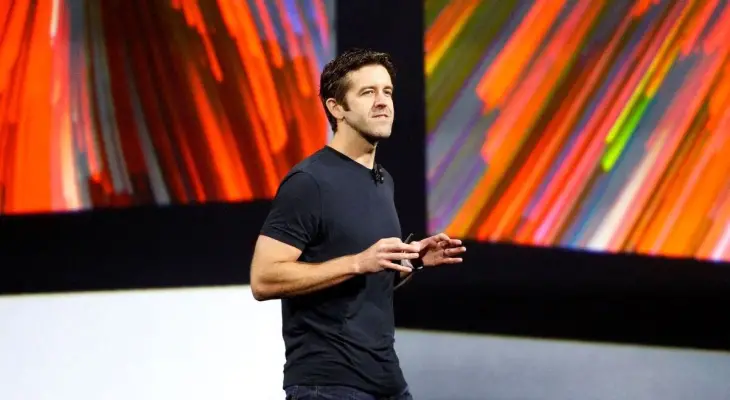
John Ternus is preparing to take over the leadership of Apple at one of the most sensitive stages in its history, after about 15 years during which Tim Cook led the company to the forefront of global markets, raising its market value to nearly 4 trillion dollars.
This leadership transition comes at a time when pressures on major technology companies are increasing, both politically and regulatorily, especially amid ongoing tensions between Washington and Beijing, and escalating scrutiny of competition and monopoly practices.
A heavy legacy and accumulating challenges
During Cook's era, the company faced prominent confrontations, including its clash with the FBI in 2016 over decrypting a device, in a case that cemented the company's image as a defender of privacy, but deepened tensions with governments in return.
It also engaged in long legal battles with Epic Games over App Store policies and imposed commissions, battles that have not been fully resolved yet, despite court rulings requiring the company to ease some restrictions.
The challenges are not limited to the United States, as the company faces investigations and regulatory pressures in several international markets, along with risks of large fines in some countries, amid accusations of exploiting its dominant position in the digital app market.
Complexities of the Chinese market
China is one of the main sources of concern, as the company heavily relies on supply chains there, making it vulnerable to political and economic fluctuations. Some of its decisions in the Chinese market, such as deleting apps and storing data locally, have also sparked repeated human rights criticisms.
Challenges of innovation and artificial intelligence
On the product front, the Vision Pro headset did not achieve the expected success, while the company's strategy in the field of artificial intelligence remains unclear compared to its competitors.
With competition accelerating in this field, the company resorted to partnerships with Google and OpenAI to enhance its capabilities, raising questions about the extent of its reliance on external parties in a technological race expected to reshape the industry.
The delay in developing an advanced version of the digital assistant “Siri” and the departure of prominent leaders from the AI sector within the company also increase the magnitude of challenges facing the new management.
Leadership test and restructuring
Ternus also faces an internal challenge represented by reshaping the leadership team after a series of departures of senior executives, which gives him an opportunity to redraw the administrative structure, but at the same time puts him before an early test to prove his ability to manage the company during a delicate transitional phase.
The future of the business model
The biggest challenge remains related to the future of the company's business model, especially with expectations that interactive AI applications will reduce the importance of the App Store, which represents one of the most important sources of revenue.
In this context, a key question arises about Ternus's ability to maintain a complex balance between innovation and expansion, and managing the political and regulatory relationships that Cook succeeded in handling, especially with the latter continuing in a leadership role within the company during the transitional phase.
This phase is seen as pivotal, not only for the future of “Apple,” but for the trajectory of the technology industry as a whole amid the rapid transformations driven by artificial intelligence.













Sunday, 19 July 2026
Loading...
--°C
--°C
- --%
- -- kmh
- --%