
Arab Canada News – News for the Arab Community in Canada
News
Fragile truce between Washington and Tehran: Two decisive weeks between war and peace
Fundamental disagreements may hinder a permanent agreement despite the temporary ceasefire
Published: April 8, 2026
With the announcement of a temporary ceasefire between the United States and Iran, the crisis enters a delicate phase characterized by cautious anticipation, as the focus shifts from military escalation to testing the possibility of reaching a comprehensive peace agreement within a short deadline not exceeding two weeks.
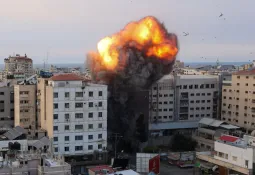
Although the decision to ease tensions has reduced the risk of an imminent confrontation that was looming, indicators confirm that the war has not actually ended, but has entered a complex negotiation phase governed by deep differences in the terms of settlement between the two parties.
The main obstacle lies in the large gap between Washington’s and Tehran’s visions for ending the conflict. Iran presents a wide package of demands including the complete lifting of sanctions, obtaining compensation for damages, releasing its financial assets, alongside the withdrawal of American forces from the region. In contrast, the United States insists on conditions related to reducing Iran’s nuclear program, imposing strict international monitoring, and limiting missile capabilities.
This divergence reflects a struggle over the nature of the “end of the war”: whether it will be a mutual political settlement, or a redefinition of regional deterrence terms according to the American vision.
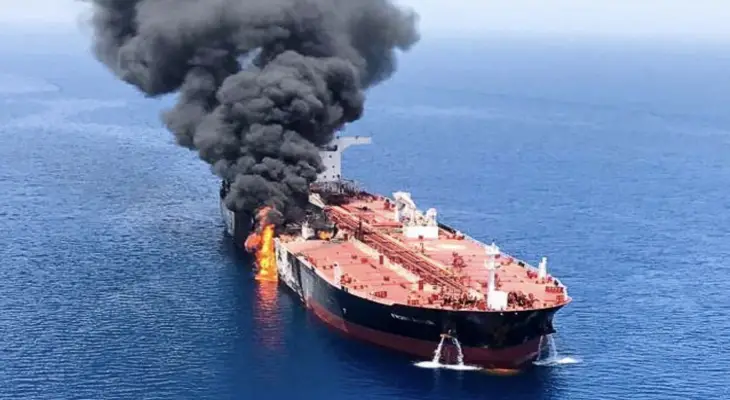
At the heart of this equation, the Strait of Hormuz emerges as one of the most sensitive files. Iran has shown readiness to keep it open during the truce period, but within arrangements that allow it direct supervision over navigation movements, with proposals to impose transit fees, adding a new economic dimension to the crisis.
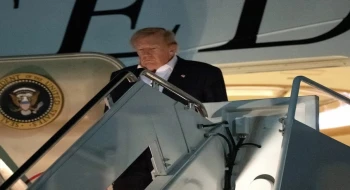
Politically, Trump seeks to present the truce as an achievement, by emphasizing the attainment of previous military objectives, which gives him an exit from escalation without appearing to retreat. However, this approach faces internal questions about the actual realization of those objectives, especially regarding weakening Iranian capabilities or changing its regional behavior.
In contrast, Tehran appears cautious in dealing with the truce, as it seeks to consolidate political gains without making strategic concessions, benefiting from its resilience during the confrontation and its ability to influence global energy routes.
Estimates indicate that the next two weeks will be decisive, as avoiding a return to escalation requires intensive diplomacy capable of bridging existing gaps, especially in the files of sanctions, the nuclear program, and the regional role.
Between a temporary truce and deep disagreements, the course of the crisis remains open to two contradictory possibilities: either a political breakthrough laying the foundations for long-term peace, or a rapid collapse of the truce that returns the region to the cycle of escalation, possibly in a more dangerous form.









Tuesday, 14 July 2026
Loading...
--°C
--°C
- --%
- -- kmh
- --%