
Arab Canada News – News for the Arab Community in Canada
News
Washington seeks to persuade China to play a bigger role in the Iran crisis ahead of the Trump-Xi summit
Rubio says that the stability of the Strait of Hormuz serves Beijing's economic interests despite its partnership with Tehran
Published: May 19, 2026
Washington —
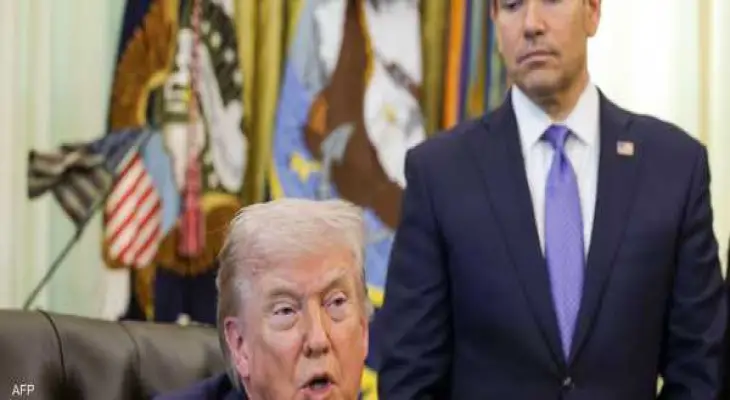
US Secretary of State Marco Rubio said that the United States will seek during President Donald Trump's visit to China to persuade Beijing to play a more active role in calming the conflict with Iran.
Rubio explained, during an interview while heading to China, that Washington presented its arguments to Chinese officials about the necessity of using their influence to push Tehran to stop the escalation in the Gulf, especially with the ongoing crisis in the Strait of Hormuz.
He said that resolving the conflict is in China's interest, because its economy heavily depends on exports, and any prolonged disruption in navigation and energy will directly affect Chinese trade and global supply chains.
Rubio pointed out that Chinese ships are still stuck or affected by the tension in the Strait of Hormuz, giving Beijing a practical reason to engage in diplomatic efforts, despite its strategic relations with Iran.
Trump is expected to discuss with Chinese President Xi Jinping, during a two-day summit in Beijing, a number of sensitive files, including Iran, trade, Taiwan, and artificial intelligence.
Rubio said that the relationship between the United States and China represents at the same time the greatest geopolitical challenge and the most important relationship that should be managed carefully, noting that Washington will continue to contain Beijing's influence where interests conflict, but will also seek cooperation when it serves global stability.
He confirmed that the Trump administration will not back down from its core demands, foremost among them preventing Iran from possessing nuclear weapons, while keeping the door open for limited cooperation with China if that helps reduce escalation.
These moves come while negotiations with Iran remain stalled, amid ongoing tension in the Gulf and concerns about the impact of the crisis on energy markets and global trade.











Thursday, 04 June 2026
Loading...
--°C
--°C
- --%
- -- kmh
- --%