
Arab Canada News – News for the Arab Community in Canada
News
Toronto falls from one of the fastest-growing cities in North America to rank 412 as population continues to decline
The decline in international migration and the rise in population movement to more affordable areas redraw the population growth map in Canada's largest city.
Published: July 11, 2026
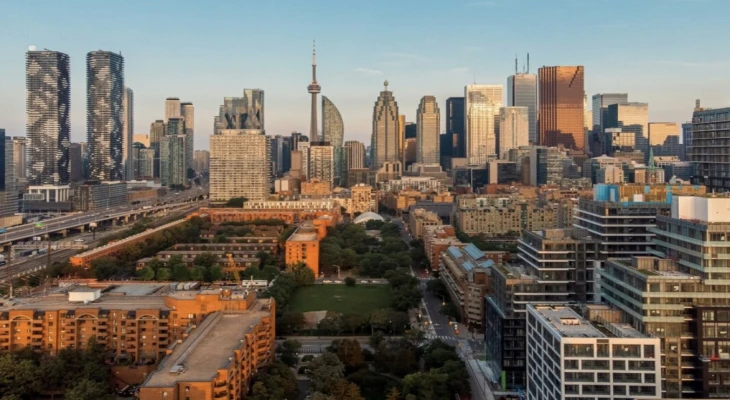
The Greater Toronto Area witnessed a sharp decline in the pace of population growth during 2025, after moving from the top of the fastest-growing cities in Canada and the United States in 2024 to rank 412 out of 435 urban areas in North America.
This decline reflects a notable shift in population growth trends, with a decrease in the rate of international immigration to Canada, and the continued movement of large numbers of residents to other cities and regions within the country in search of lower living and housing costs.
Although Toronto retained a prominent position among the cities most welcoming to new immigrants, these gains were not enough to offset the losses caused by the migration of residents to other areas in Ontario and different Canadian provinces.
Analysis showed that net internal migration remained negative, as a number of the region’s residents left for cities offering lower housing prices and more affordable living costs, which reduced the population increase achieved through international immigration.
Conversely, both Calgary and Edmonton emerged as the fastest-growing Canadian cities in terms of absolute population increase, occupying two positions among the top ten fastest-growing urban areas in North America.
Montreal and Vancouver also saw their rankings decline compared to the previous year, but the decrease experienced by Toronto was the most severe among major Canadian cities.
Researchers believe that the slowdown in growth is not only related to the federal government’s reduction of immigration targets but also reflects a change in population movement patterns within Canada, where housing affordability has become a key factor in relocation decisions.
High home prices and rents in the Greater Toronto Area continue to push many families and young people to seek better opportunities in other cities, especially in the provinces of Alberta and Ontario outside the Greater Toronto Area, where housing costs remain relatively lower.
The report confirms that the continuation of this trend could affect the labor market, housing demand, and infrastructure planning, and may also redistribute economic and demographic growth among Canadian cities in the coming years.
The analysis indicates that restoring Toronto’s previous growth rates will require more than just increasing the number of immigrants; improving housing affordability, expanding the housing supply, and limiting population movement to other areas will be essential factors in maintaining the attractiveness of Canada’s largest city.













Sunday, 12 July 2026
Loading...
--°C
--°C
- --%
- -- kmh
- --%