
Arab Canada News – News for the Arab Community in Canada
News
Retail sales in Canada rise driven by fuel prices, not increased consumption
High energy boosts cash revenues while the figures reveal weak real demand from Canadian households

Published: May 22, 2026
Ottawa —
Retail sales in Canada recorded an increase in April, mainly driven by rising fuel and energy prices, at a time when rising living costs began to more clearly pressure household spending and real consumer demand.
Preliminary estimates showed retail sales rose by 0.6% in April, after an increase of 0.9% in March, continuing growth for the seventh consecutive quarter.
Retail sales also increased by 2.1% in the first quarter of the year compared to the last quarter of 2025, reflecting continued economic activity in terms of the cash value of sales.
However, a deeper reading of the numbers reveals that most of this growth was not due to an actual increase in consumption, but because of rising prices, especially in the fuel and energy sector.
In March, sales at gas stations and energy suppliers jumped by 12.4%, while the actual quantities sold decreased by 1.9%, meaning consumers paid more for less consumption.
Excluding fuel sales, retail sales declined by 0.2%, indicating a slowdown in spending across multiple sectors.
Data also showed a 0.5% decline in sales by car dealers and parts suppliers, while core retail sales — which exclude fuel and automobiles — recorded a decrease of 0.1%.
The declines included a 2.9% drop in sales of building materials and garden supplies, in addition to a 0.5% decrease in general merchandise store sales for the first time in three months.
On the other hand, the food and beverage sector continued to record positive performance, with sales rising by 0.5% supported by grocery stores and supermarkets, as households continue to prioritize spending on essential needs.
On a real quantity basis, retail sales fell by 0.7% in March, an indicator considered by economists to be more accurate for measuring the strength of actual demand, as it excludes the effect of inflation and rising prices.
These figures reflect a more complex economic reality within Canada, where cash revenues appear higher, while the real purchasing power of households declines under the pressure of fuel, transportation, food costs, and high interest rates.
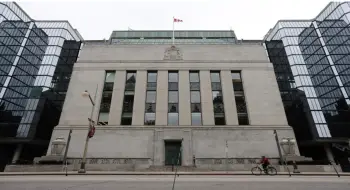
In financial markets, Canadian government bond yields declined, and the Canadian dollar fell against its US counterpart, amid expectations that the Bank of Canada will continue to hold off on adjusting interest rates.
Analysts see the current data as giving the central bank an additional reason for caution, as it faces a difficult equation between an economy showing signs of slowing real demand and inflationary pressures still driven by energy and fuel prices.
Nine Canadian provinces recorded an increase in retail sales in March, with Ontario having the largest contribution to growth, mainly driven by higher fuel and energy sales.













Wednesday, 03 June 2026
Loading...
--°C
--°C
- --%
- -- kmh
- --%