
Arab Canada News – News for the Arab Community in Canada
News
Four scenarios for war with Iran… and continued confrontation remains the most likely option
The balance of deterrence and the complexities of the regional scene prevent a quick resolution or a comprehensive explosion.
Published: March 19, 2026
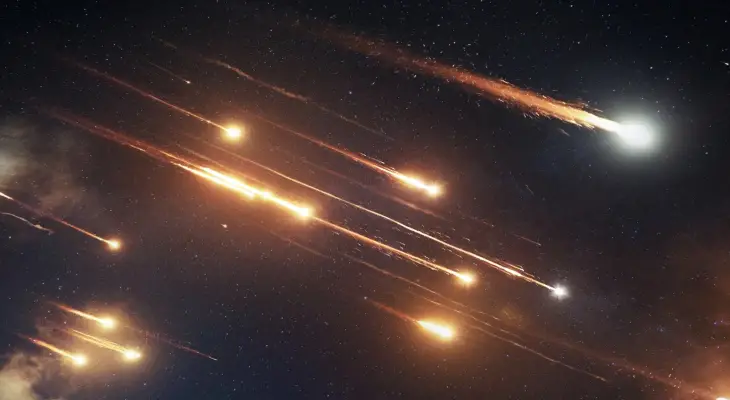
As the confrontation related to Iran enters an advanced stage of escalation, the features of a complex scene are taking shape, governed by delicate balances between the desire to achieve military gains and avoiding slipping into a full regional war. Despite the intensity of the strikes and the widening scope of tension, decisive indicators are still absent, opening the door to four main scenarios competing to shape the next path of the conflict.
The first scenario is the continuation of the war at its current pace, with fluctuations in the level of escalation rising and falling according to field developments. This path seems the most likely at the present stage, as it achieves a certain amount of objectives for the warring parties without crossing the red lines that could lead to a wide confrontation that is difficult to contain. The United States and Israel continue military pressure in a calculated manner, while Iran and its allies maintain tools of response and influence, whether through regional fronts or by pressuring vital energy corridors. This fragile balance reinforces keeping the conflict within the scope of "controlled escalation."
The second scenario is the expansion of the war’s scope and the direct involvement of new parties, whether from Tehran’s allies or Washington’s partners. This possibility remains given the multiple arenas of tension, especially in Lebanon and the Gulf, but it remains governed by calculations of the high political, economic, and military costs, which push most parties to hesitate before fully engaging in the confrontation.
The third scenario, which is resorting to unconventional or widely destructive weapons, is the least likely despite its theoretical danger. Such an option would transfer the conflict to an uncontrollable level and threaten to expand it into an open international confrontation, which the major powers are keen to avoid at this stage.
Conversely, the fourth scenario, that is stopping the war either through a political agreement or an undeclared truce, remains the most logical option in terms of outcomes, but the least likely in the near term. The positions of the parties remain divergent, with each side insisting on achieving military or political gains before accepting any settlement.
In light of these facts, the continuation of the war within limited escalation levels emerges as the most realistic path in the near term, driven by a delicate balance between deterrence and pressure. With the absence of indicators of a real political breakthrough, the scene remains open to rapid developments, where any qualitative field shift could lead to a sudden rearrangement of the scenarios.







Sunday, 19 July 2026
Loading...
--°C
--°C
- --%
- -- kmh
- --%