
Arab Canada News – News for the Arab Community in Canada
News
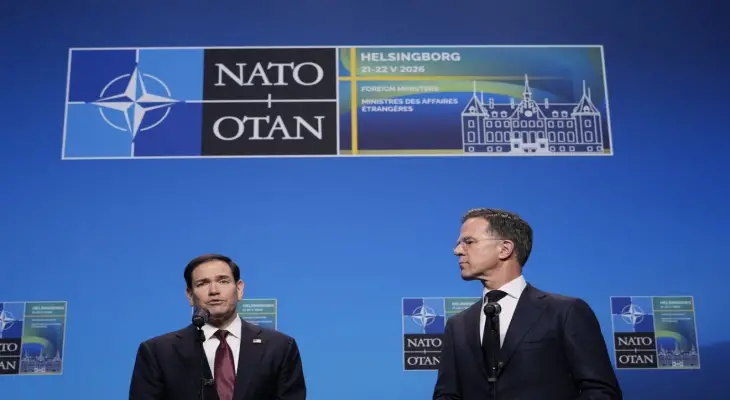
Confusion within NATO after Trump's sudden shift regarding US forces in Europe
Washington's allies were surprised by the announcement of sending additional forces to Poland after previous indications of reducing the US military presence.
Published: May 22, 2026
Europe —
US President Donald Trump sparked confusion within NATO after a sudden change in his administration's stance on the US military presence in Europe, amid increasing questions about the direction of American defense policy on the continent.
The confusion arose after the US administration quickly shifted from talking about reviewing and reducing some military deployments in Europe to announcing the sending of additional troops to Poland, a move that surprised several European allies and NATO officials.
European officials believe that the rapid shift in the US position created a state of ambiguity within the alliance, especially amid the ongoing war in Ukraine and escalating security tensions on NATO’s eastern front.
Several European capitals had been monitoring signs in recent weeks of a possible reduction or repositioning of some US forces in Europe, which raised concerns about the future of the alliance’s military deterrence against Russia.
However, Trump’s announcement of sending thousands of additional troops to Poland reshuffled calculations within NATO and led several officials to question whether Washington is moving towards strengthening its military presence or restructuring it in a volatile and unstable manner.
Poland is seen as one of the most important military strongholds of the alliance in Eastern Europe, especially with growing security concerns since the outbreak of the Russian-Ukrainian war.
Warsaw is also one of the closest European allies to the Trump administration and adopts a position supporting increased military spending and enhancing the US presence on its territory.
This development comes at a time when relations between Washington and some of its European allies are increasingly tense, due to disagreements over defense spending, the future of military support, and the role of the United States within the alliance.
Trump had repeatedly criticized European countries for what he considers “excessive reliance” on American protection, demanding that allies bear a larger share of the financial and military burdens.
However, the rapid shifts in US decisions are causing growing concern within European circles, where officials believe the alliance’s defense strategy needs clarity and stability, especially during a period described as one of the most security-sensitive in decades.
Some allies fear that sudden and changing decisions will disrupt long-term military planning within NATO, whether regarding troop deployments, defensive infrastructure, or preparations related to collective deterrence.
Although the United States remains the largest military power within the alliance, the European debate is increasingly moving towards strengthening self-defense capabilities and reducing absolute reliance on volatile US decisions.
The current controversy reflects a broader reality within NATO: the challenge is no longer only facing external threats but also maintaining unity of vision and strategic stability within the alliance itself.











Wednesday, 03 June 2026
Loading...
--°C
--°C
- --%
- -- kmh
- --%