
Arab Canada News – News for the Arab Community in Canada
News
Blatter criticizes the 2026 World Cup: Spain is a deserving champion but the tournament has lost its credibility
The former FIFA president warns against the infiltration of politics in football and calls for the restoration of the game under new leadership
Published: July 22, 2026
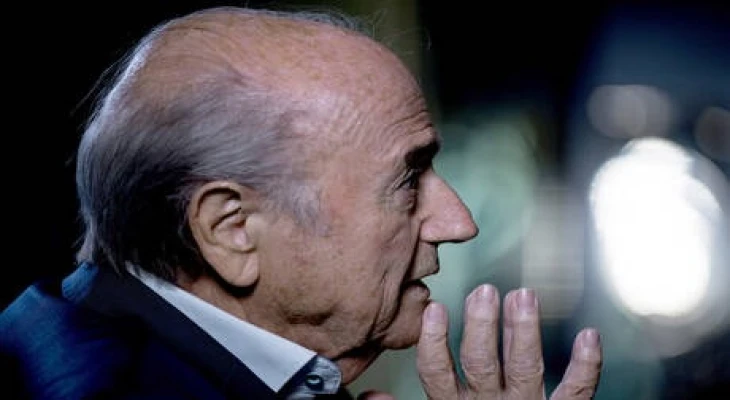
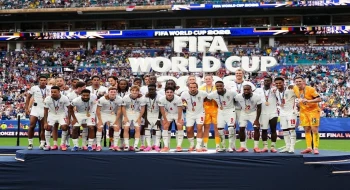
The former president of the International Federation of Association Football, Sepp Blatter, directed sharp criticism at the way the 2026 World Cup was managed, considering that the tournament lost some of its credibility after politics and controversy outside the field overshadowed the sporting competition.
Blatter's stance came after the conclusion of the longest edition in the history of the World Cup, which ended with the Spanish national team winning the title after defeating Argentina by one goal to nil in the final match.
Despite his harsh criticism of the tournament, Blatter acknowledged the Spanish national team's right to win, describing Spain as the rightful champion of the edition held in Canada, the United States, and Mexico.
However, he saw that the road to the final whistle witnessed events that weakened the image of the tournament and diverted attention from football itself, stressing that political interventions should not obscure the game or affect its management and decisions.
A call to restore football
Blatter called on fans, players, and national federations to take action to restore football and return it to what he described as its fundamental roots.
He said the game must return to its true owners, referring to the fans, players, and national football institutions, instead of its increasing submission to political and commercial interests.
He also spoke about the necessity of achieving this under a «new leadership», in a message interpreted as a direct criticism of his successor Gianni Infantino, who has been heading the international federation since 2016.
Blatter's statement reflects the continuation of his public dispute with the current FIFA administration, which he accuses of expanding tournaments and prioritizing commercial and political interests at the expense of football's identity and the stability of its competitions.
Political controversy accompanied the tournament
The 2026 World Cup was accompanied by extensive discussions about the relationship between politics and football, especially in light of the clear rapprochement between FIFA leadership and the American administration, and the controversy surrounding some organizational and disciplinary decisions during the tournament.
The way several events related to the World Cup were organized, the expansion of the tournament to 48 teams, and the hosting of 104 matches also raised questions about the direction of the world's largest football competition.
FIFA was also criticized for the high ticket prices, the tight match schedule, and the exaggeration in entertainment and commercial aspects, amid demands to preserve the sporting nature of the tournament and not turn it into a political or show platform.
However, Blatter did not provide a detailed list of the events he based his statement on, limiting himself to affirming that the influence of politics harmed the credibility of the World Cup and overshadowed the game.
Increasing criticism of Infantino
Blatter's statements coincided with rising criticism directed at Infantino from prominent officials in European football, due to FIFA's policies related to expanding tournaments and increasing the number of matches.
Critics of Infantino believe that the international federation has become more involved in the football calendar, and that the continuous expansion of international competitions threatens domestic tournaments and increases the physical burden on players.
The close relationship between the FIFA president and U.S. President Donald Trump also raised questions about the independence of the international institution from political influence, an issue that occupied a prominent place in the controversy accompanying the World Cup.
Blatter's call for a «new leadership» carries a clear political implication, even if he did not explicitly demand Infantino's resignation in the same statement.
Spain ends the tournament with the second title
On the sporting level, Spain ended the tournament by winning its second world title, after a final match that extended into extra time against the defending champion Argentina.
Ferran Torres scored the only goal of the match in the 106th minute, granting the Spanish national team its first world title since the South Africa World Cup in 2010.
Spain finished the tournament with a strong record, after overcoming Portugal, Belgium, and France in the knockout stages, before settling the final against Argentina.
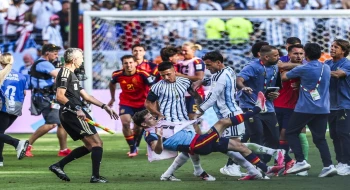
However, the celebrations of the victory were accompanied by clashes between players of the two teams after the final whistle, adding a new chapter to the series of events that kept the controversy ongoing after the competitions ended.
Thus, the 2026 World Cup ended with a dual image: a historic sporting success for Spain, versus ongoing debate about FIFA's management of the tournament and the boundaries of the relationship between football, politics, and commercial interests.









Wednesday, 22 July 2026
Loading...
--°C
--°C
- --%
- -- kmh
- --%