
Arab Canada News – News for the Arab Community in Canada
News
The war of influence, not power: Why does Washington seem less dominant than it appears?
Analytical reading of the conflict balances between the United States and Iran after a month of confrontation
Published: March 31, 2026
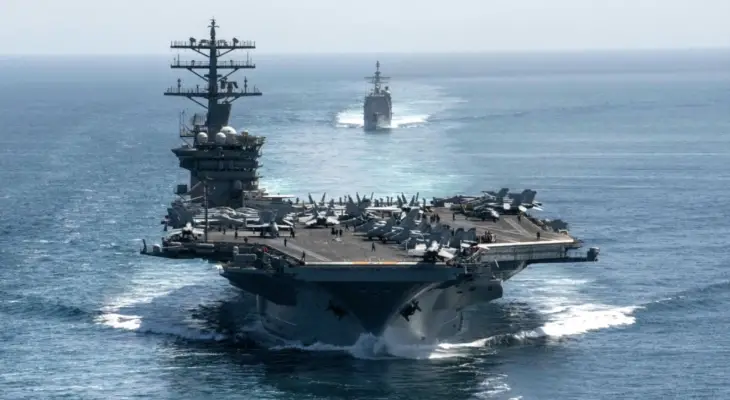
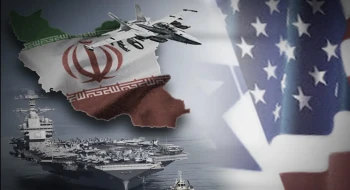
After a month since the outbreak of the confrontation between the United States and Iran, it becomes clear that the traditional balance of power is no longer the decisive factor in the course of the war, as the conflict has gradually turned into a battle of influence and leverage, beyond direct military calculations.
On the surface, the United States possesses overwhelming superiority in military and economic capabilities, supported by a strong regional ally, which makes any conventional confrontation clearly tilt in its favor. However, this superiority has not translated into a quick resolution, but rather revealed deep strategic constraints facing the American decision-maker.
On the other hand, Iran relied on a different strategy based on maximizing the impact of its limited strengths, benefiting from its ability to inflict disproportionate damage on the global economy, especially through the Strait of Hormuz card, which constitutes a vital artery for energy supplies. This card granted Tehran influence beyond its military weight, placing Washington before a complex dilemma between military escalation and its political and economic costs.
Although the United States is militarily capable of imposing control over the strait or targeting Iranian infrastructure, any such step carries significant risks, including the possibility of human losses, exposure of its allies’ interests to retaliatory attacks, or even slipping global markets into a deeper crisis. These considerations restrict the American maneuvering space and weaken the effectiveness of military superiority as a decisive tool.
In the same context, the announced diplomatic successes appear to have limited impact, as they do not reflect a real breakthrough but rather represent a partial containment of the crisis’s repercussions. Also, the American political discourse, which combines threat and the hint of negotiation, reflects an attempt to achieve a difficult balance between military pressure and avoiding slipping into a full-scale war.
In contrast, Iran bets on the factor of time, where prolonging the conflict raises the cost of confrontation for the United States and its allies, whether through energy market disruptions or increased internal and external pressures on the American administration. This approach gives Tehran the ability to endure without the need to achieve a direct military victory.
Nevertheless, Iranian calculations are not without risks, as the continuation of the war without a clear political horizon may expose it to harsher economic pressures, especially under sanctions, which in turn makes it in need of a negotiated exit that ensures the alleviation of these pressures.
In conclusion, the course of the war reveals a complex strategic reality: the United States has the power but is constrained by its cost, while Iran has limited but effective leverage tools. Between these two paths, the future of the conflict is determined not by who has the greater power, but by who manages their cards better without pushing matters toward the point of no return.










Sunday, 19 July 2026
Loading...
--°C
--°C
- --%
- -- kmh
- --%