
Arab Canada News – News for the Arab Community in Canada
News
Karni responds to Trump's threats regarding the Gordie Howe Bridge and confirms: Canada fully funded the project
The Canadian Prime Minister clarifies that the bridge was built with Canadian and American labor and materials and that its ownership is shared with the state of Michigan.
Published: February 10, 2026
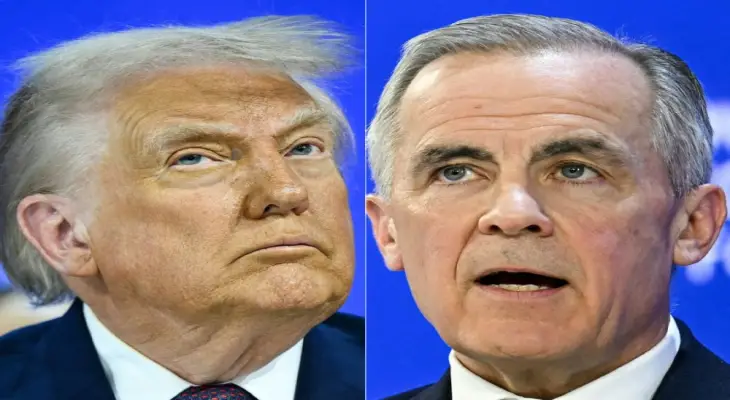
Canadian Prime Minister Mark Carney said he had a phone call with U.S. President Donald Trump early Tuesday morning to discuss recent statements and threats related to the Gordie Howe International Bridge connecting Canadian Windsor and American Detroit.
Carney explained that he directly informed Trump that Canada fully funded the project, at a cost of nearly 4 billion Canadian dollars, emphasizing that the bridge was built using labor and materials from both Canada and the United States, including steel, contrary to what he described as the U.S. president's "false claims" that the project did not include "any significant American content."
The Canadian prime minister added that during the call he confirmed that the bridge is not owned by one party, clarifying that ownership is public and shared between Canada and the state of Michigan, and is not owned by the U.S. federal government as Trump had previously stated.
Carney pointed out that the entity responsible for operating the bridge is the Windsor-Detroit Bridge Authority, a Crown corporation that manages the crossing after its official operation is completed.
Trump had previously threatened to potentially block the opening of the bridge, claiming that Canada "owns it on both sides" and that it was built without complying with the "Buy American" law, statements that Ottawa categorically denied, considering them to ignore the legal and financial facts related to the project.
The Gordie Howe Bridge is one of the most important infrastructure projects between the two countries, as it is expected to contribute to enhancing trade movement and supply chains between Canada and the United States, at a time when trade relations between the two sides are experiencing increasing tension due to tariffs and economic disputes.












Sunday, 19 July 2026
Loading...
--°C
--°C
- --%
- -- kmh
- --%