
Arab Canada News – News for the Arab Community in Canada
News
Carney calls for three by-elections in Canada on August 31
Voters in ridings in British Columbia, Ontario, and Quebec choose successors to three MPs who left the House of Commons for new diplomatic and political positions
Published: July 26, 2026
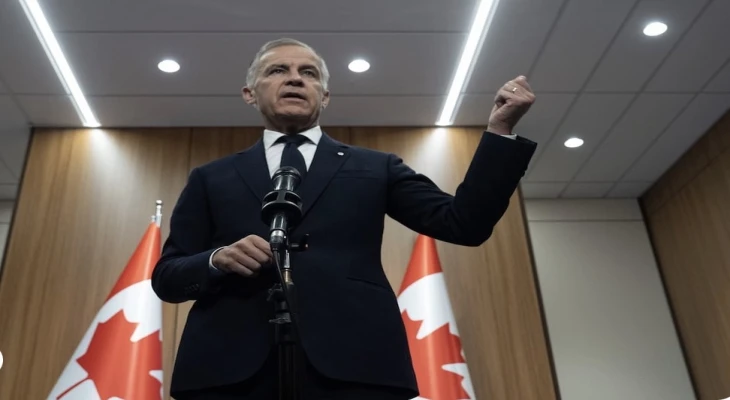
The Canadian Prime Minister Mark Carney has called for three by-elections on August 31, 2026, to fill vacant seats in the House of Commons in the North Vancouver–Capilano riding in British Columbia, Beaches–East York in Ontario, and Chicoutimi–Le Fjord in Quebec.
The election campaigns officially began following the call on Sunday, July 26, as the Canadian Electoral Authority prepares to open local offices in the three ridings and oversee voter registration and the reception of early and mail-in voting requests.
The elections will restore two seats previously held by the Liberal Party and one seat represented by the Conservative Party, making it an early test of the popularity of federal parties in three politically and geographically different regions.
Wilkinson leaves for a diplomatic post
The North Vancouver–Capilano seat became vacant after the resignation of Liberal MP and former minister Jonathan Wilkinson, following his appointment as Canada’s ambassador to the European Union.
Wilkinson left the House of Commons on June 19, after representing the area since his first election in 2015, and held several ministerial positions in successive Liberal governments.
He had retained the seat in the 2025 federal election with nearly 60% of the vote, the best result he achieved during his electoral career.
This margin gives the Liberal Party an initial advantage in the race, but the absence of a well-known MP who held the seat for more than a decade opens the door for the Conservatives and other parties to try to change the political balance in the area.
New race in Beaches–East York
The election in the Beaches–East York riding comes after the resignation of Liberal MP Nathaniel Erskine-Smith from the House of Commons on July 7.
Erskine-Smith was known for his independent positions within the Liberal caucus, having opposed party leadership on several issues, despite continuing to represent the riding since 2015.
He achieved a large victory in the last federal election by securing about 67% of the votes, making the riding one of the strongest Liberal seats in Toronto.
However, this by-election will be held without a current MP with a broad personal base, which will test the Liberal Party’s ability to retain the seat relying on its political brand and new candidate.
The race will also gain additional importance due to its location in Toronto, where Liberals, Conservatives, and New Democrats compete for voters concerned with housing, cost of living, transportation, and public services.
Tighter competition in Quebec
The Chicoutimi–Le Fjord riding is expected to be the most competitive among the three, after its seat became vacant following the resignation of Conservative MP Richard Martel.
Martel left the House of Commons after being appointed to the Senate, ending a parliamentary career that began with his victory in a 2018 by-election.
The Conservatives retained the riding in the April 2025 election, but the race was close, with Martel leading by only about 1,500 votes over his opponents from the Bloc Québécois and the Liberal Party.
The closeness of previous results makes the new election an open race among three main parties, as the Conservatives seek to defend the seat, the Bloc Québécois hopes to regain it, and the Liberals try to expand their representation in the Saguenay–Lac-Saint-Jean area.
The campaign in the riding is likely to focus on jobs, regional industries, energy, economic development, and Quebec’s relationship with the federal government.
Political test for Carney’s government
The importance of the by-elections is not limited to choosing three new MPs; they will provide an indicator of voters’ stance toward Carney’s government after months of trade and economic tensions with the United States.
The Liberal Party currently holds 172 seats in the House of Commons, the numerical threshold needed for a majority in the 343-seat chamber, while the Conservatives hold 139 seats.
The Liberals have the opportunity to regain the two seats lost due to the resignations, and possibly add a third seat if they succeed in taking Chicoutimi–Le Fjord from the Conservatives.
The Conservative Party, led by Pierre Poilievre, will try to defend its seat in Quebec and make a breakthrough in one of the two ridings previously held by the Liberals.
The results give the parties a chance to evaluate their political messages and field organization ahead of the next federal elections, even though by-elections are often influenced by local conditions and lower turnout than general elections.
Four vacant seats in the House of Commons
There are currently four vacant seats in the House of Commons, but the new call includes only three ridings.
The Saint-Hyacinthe–Bagot–Acton riding in Quebec is still awaiting the scheduling of its by-election, following the resignation of its MP Simon-Pierre Savard-Tremblay in June.
The law allows the government to set different dates for by-elections, as long as the call is issued within the legal timeframe starting after the Electoral Authority is officially notified of the vacancy.
It is not required that all elections for vacant seats be held on the same day, even when the MPs’ resignation dates are close.
Four days of early voting
Voters in the three ridings will be able to cast their ballots on election day, Monday, August 31, at their designated polling stations.
Early voting centers will also be open for four days, from Friday, August 21 to Monday, August 24.
Voters can also vote earlier at the local office of the Canadian Electoral Authority until 6:00 PM on Tuesday, August 25.
Mail-in voting is also available, but a request for a special ballot must be submitted before 6:00 PM on August 25 and returned within the specified deadlines to be counted.
To vote, a voter must be a Canadian citizen at least 18 years old on election day and have resided in one of the three ridings from July 26 until election day.
Voters must also prove their identity and address, with the option to register in advance or register at the polling station when voting.
Short campaigns before the end of summer
The election campaign lasts 36 days, the shortest period allowed by law for federal by-elections.
The timing of the vote at the end of August puts the parties before an intense summer campaign, during which candidates must be chosen, teams organized, and voters reached during a period that usually sees a decline in political activity.
The timing of the election may lead to lower turnout compared to general elections, increasing the importance of each party’s ability to mobilize its supporters and persuade them to vote.
While the ridings in Ontario and British Columbia appear more inclined toward the Liberals based on previous results, Chicoutimi–Le Fjord remains the tightest and most likely to change party representation.
The results of August 31 will reveal whether the Liberals can regain their seats and expand their majority, or if the Conservatives and Bloc Québécois will be able to use the by-elections to redraw the political balance within the House of Commons.
The election date, voting options, deadlines, seat status, previous election results, and current distribution of the House of Commons have been verified.













Sunday, 26 July 2026
Loading...
--°C
--°C
- --%
- -- kmh
- --%