
Arab Canada News – News for the Arab Community in Canada
News
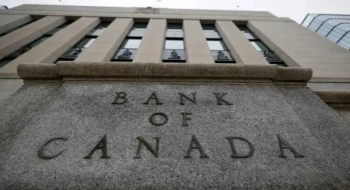
Bank of Canada set to hold interest rate at 2.25% and debate shifts to timing of hike start
Improved growth and the labor market reduce the likelihood of cuts, while inflation exceeding 3% raises a division over whether interest rate hikes will begin this year or in 2027.

Published: July 15, 2026
Bank of Canada is heading towards keeping the key interest rate unchanged at 2.25% on Wednesday, in a widely expected decision that could represent the sixth consecutive hold, while market attention shifts from the possibility of a rate cut to the timing of starting a new cycle of hikes.
The issue of holding the interest rate is no longer a major point of disagreement among economists, after recent data showed improvement in economic activity and the labor market, coinciding with inflation remaining above the central bank’s 2% target.
However, attention will turn to the language the bank uses in the decision statement, and to its new growth and price forecasts within the monetary policy report, searching for signals on whether it is preparing to withdraw some monetary stimulus in the coming months.
The Canadian economy had started 2026 with weak performance, recording a slight contraction in GDP in the first quarter, contrary to previous expectations that indicated growth.
However, indicators improved later, with economic activity returning to expansion and employment rising during May and June, alongside a decline in the unemployment rate to 6.5%.
This improvement means the bank does not face direct pressure to cut rates to support the economy, but the economy still operates below full capacity and retains a degree of weakness that may prevent it from rushing to raise borrowing costs.
On the other hand, the annual inflation rate rose to 3.2% in May, exceeding the upper limit of the bank’s target range, largely driven by rising energy and transportation costs.
Despite oil prices falling from the high levels recorded during the escalation in the Middle East, concerns remain about the possibility of increased energy costs transferring to prices of other goods and services.
Bank of Canada will particularly monitor whether the inflation rise is temporary and confined to energy, or if it has started to affect wages, consumer expectations, and core prices within the economy.
Core inflation measures remain closer to the 2% target than overall inflation, which gives the bank room to wait for more data before deciding on a rate hike.
Economists believe that the continued existence of a gap between actual output and the economy’s potential capacity would limit inflationary pressures and prevent the bank from moving quickly towards monetary tightening.
The bank is expected to lower its growth estimates for the first quarter following the weaker-than-expected performance, but it may offset some of that by raising its estimates for the second quarter, which preliminary indicators suggest saw a stronger recovery.
As for inflation, it may be the most complicated aspect of the new forecasts, as the May reading came higher than the peak the bank had previously expected.
The weak Canadian dollar and rising input and transportation costs also increase the risks of prices remaining elevated for a longer period, even after the direct pressure from oil declines.
Division among banks regarding the timing of the increase
Major Canadian banks differ clearly in their expectations about how long the interest rate will remain at its current level.
Both TD and Bank of Montreal expect the rate to stay at 2.25% until the end of 2027, based on continued excess capacity in the economy and weakness in some investment and consumption sectors.
In contrast, CIBC and National Bank expect rate hikes to begin during 2027, with improving economic activity and a decline in factors that have restrained growth.
Royal Bank of Canada favors a gradual tightening cycle that raises the interest rate to about 3.25% by the end of 2027.
Scotiabank adopts the most aggressive expectations, seeing the first increase possibly coming in the last quarter of this year, followed by a second increase before the end of 2026, then another increase in early 2027.
Under this scenario, the interest rate could rise to 2.75% by December, then reach 3% shortly thereafter.
However, most economists still believe the bank will remain neutral for a longer period, and that energy-related inflation alone will not be sufficient to justify a rate hike unless it spreads to broader components of the economy.
What does the decision mean for households?
Holding the rate will provide some stability for borrowers and variable-rate mortgages, but it will not necessarily lead to a rapid decline in borrowing costs.
Fixed mortgage rates may also remain relatively high if bond yields continue to reflect expectations of future rate increases.
Any shift in the tone of Bank of Canada will have a direct impact on the Canadian dollar, bond markets, and mortgage expectations, even if the bank does not change the actual interest rate this week.
Therefore, the most important question on Wednesday will not be whether the bank keeps the rate at 2.25%, but whether it signals that the long hold phase is nearing its end, or confirms that the economy still needs more time before starting to raise borrowing costs.













Wednesday, 15 July 2026
Loading...
--°C
--°C
- --%
- -- kmh
- --%