
Arab Canada News – News for the Arab Community in Canada
News
A town in Manitoba launches a home-buying program with only a 1% down payment
A local initiative aims to facilitate ownership amid the housing affordability crisis
Published: April 16, 2026
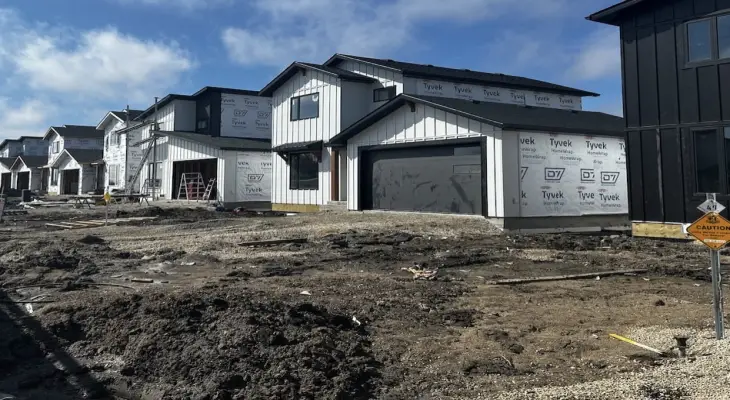
One of the towns in Manitoba launched an unconventional housing initiative that allows buyers to own homes with a down payment not exceeding 1% of the property's value, in a step aimed at reducing financial barriers to entering the housing market, especially for first-time buyers.
This initiative comes amid increasing pressures related to rising home prices and borrowing costs in Canada, making providing the down payment — which is usually at least 5% — one of the main challenges facing young families.
Program Mechanism
The program relies on a shared financing model, where developers or local authorities contribute the majority of the down payment, while the buyer is required to provide only a symbolic 1%, which reduces the immediate cash burden and allows for faster ownership.
The program primarily targets low- and middle-income families, in addition to local residents wishing to settle within the community, with conditions related to actual residence in the home and not using it for investment purposes.
Response to a Broader Crisis
This initiative reflects an increasing trend towards local solutions to address the housing crisis, amid the limitations of traditional federal programs, where some municipalities resort to offering direct incentives to attract residents and stimulate economic growth.
Data indicates that many purchase support programs in Canada usually rely on loans or grants covering a portion of the down payment, which in some cases may reach about 5% of the home's value, making the 1% model bolder in terms of reducing the initial financial barrier.
Opportunities and Risks
Despite the clear attractiveness of the initiative, specialists point out the need to assess the long-term financial capacity of buyers, as a lower down payment may mean higher monthly obligations or the need for additional loan insurances.
These programs also raise questions about their sustainability and the possibility of generalizing them on a wider scale, given their reliance on local support or specific partnerships.
Towards New Ownership Models
This step reflects a gradual shift in housing policies towards more flexible models, focusing on reducing initial barriers rather than only lowering prices, in an attempt to rebalance a market that is becoming increasingly difficult for a wide segment of Canadians.
Amid the ongoing ownership affordability crisis, such initiatives may represent a test for new models that can be reformulated and expanded in other areas if proven successful.













Wednesday, 01 July 2026
Loading...
--°C
--°C
- --%
- -- kmh
- --%