
Arab Canada News – News for the Arab Community in Canada
News
Wildfire smoke blankets Alberta summer and warnings of declining air quality
Expectations of repeated episodes of smog in Calgary and other areas as the fire season continues, with air affected by wind direction and the movement of smoke masses
Published: July 4, 2026
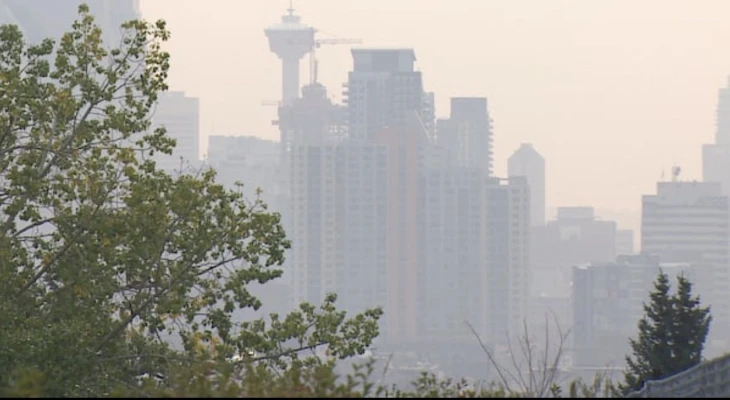
Alberta is preparing for a summer that may witness frequent periods of wildfire smoke, as fires continue to be active in several areas of western and northern Canada, with increased chances of smoke being carried by the wind to cities and residential areas, even those far from the direct fire sites.
Forecasts indicate that the impact of the smoke in the coming weeks will not be constant or equal across all areas, as air quality can change rapidly from day to day, or even hour to hour, depending on wind direction, fire intensity, smoke column height, and weather conditions that determine the path of airborne particles.
Calgary, Edmonton, and large areas of central and southern Alberta are among the regions that may be intermittently affected by haze, especially when winds push smoke masses coming from fire zones toward major population centers. In such cases, visibility may decrease and the sky may turn gray or orange, while breathing becomes more difficult for sensitive groups.
The health concern is not limited to the smell of smoke or irritation of the eyes and throat, but is mainly related to the fine particles carried by wildfire smoke, which can penetrate deep into the respiratory system and worsen symptoms of asthma, heart, and lung diseases. Children, the elderly, pregnant women, outdoor workers, and people with respiratory or heart conditions are more vulnerable to these effects.
Air quality experts warn that the absence of fires in a certain area does not necessarily mean the air is safe, as smoke can travel hundreds of kilometers before settling over cities, and air quality may deteriorate in areas that do not have any nearby fires.
Health guidelines advise residents to regularly monitor the air quality index, reduce outdoor activities when pollution levels rise, keep windows and doors closed as much as possible, operate appropriate air purification or indoor ventilation systems, and avoid exercising outdoors during periods of dense smoke.
People with chronic illnesses are also advised to keep necessary medications within reach and consult a doctor if symptoms worsen, especially if shortness of breath, chest pain, persistent cough, dizziness, or unusual fatigue appear.
Although long-term forecasts remain linked to the development of the fire season and climatic conditions, continued drought and rising temperatures during the summer may increase the flammability of forests and vegetation, raising the likelihood of persistent or recurring smoke waves.
These developments confirm that wildfire smoke has become an increasingly present part of the Canadian summer scene, not only as an environmental consequence of fires but as a health and living challenge that requires residents and authorities to be continuously prepared, follow warnings, and treat air quality as a key factor in daily planning during the summer season.











Sunday, 05 July 2026
Loading...
--°C
--°C
- --%
- -- kmh
- --%